Structured Asset Data Schemas for DCIM Ingestion at Project Handoff
Structured asset schemas at project start prevent costly DCIM data gaps at turnover.
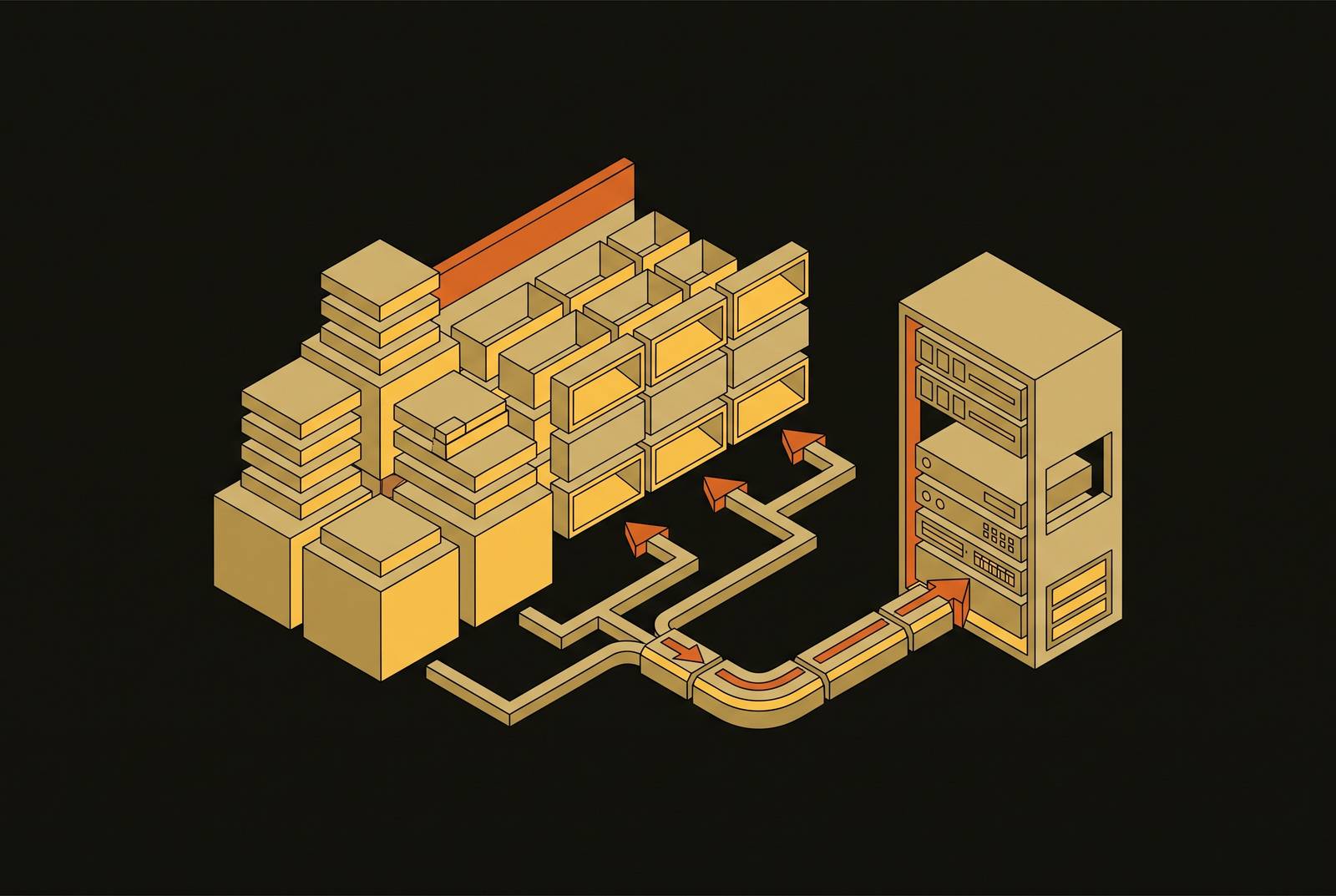
DCIM-ready BIM handoff from design models to operations depends on a structured asset data schema. The schema defines which fields must be populated, who supplies them, and what format and completeness standard operations will accept. Successful ingestion is a data governance task that starts at project kickoff and continues after turnover.
Why DCIM ingestion fails at handoff even when the technology is ready
The operations team receives the keys to a facility, but its DCIM record does not reflect what was built. Equipment may be missing, or the database may hold design-intent records that nobody has reconciled against the installation. Most DCIM platforms can ingest what construction and commissioning teams produce. What is missing is a defined standard for what those teams must deliver.
The mismatch starts with how the information is organized. BIM objects follow construction disciplines and drawing sets, while DCIM assets follow operational domains, including racks, PDUs, cooling units, patch panels, and their connecting circuits. A mechanical unit can have detailed duct routing but no structured fields for rated capacity or maintenance intervals. Once contractors demobilize, filling those gaps becomes expensive, error-prone, and frequently incomplete.
What the schema actually is and what it has to cover
A structured asset data schema is more than a data dictionary or file format specification. It defines required fields, their owners, their formats, and the conditions under which a turnover record is accepted. Physical asset records cover manufacturer, model, serial number, asset tag, rack location, rack unit position, installation date, and physical dimensions. These apply to equipment including servers, storage arrays, network switches, patch panels, PDUs, UPS systems, and in-row cooling units.
Power records show the path of every circuit from the utility entrance through switchgear, UPS systems, PDUs, and rack-level power strips to the equipment receptacles. They include breaker identification, amperage ratings, phase assignments, and measured load at commissioning. Network records describe every physical cable connection through cable type, length, color code, port identifiers at both ends, and patch panel cross-connect assignments. Rack elevations show how the equipment was installed, which may differ from the intended layout.
Warranty and maintenance records have start and end dates, the service provider in charge, agreement numbers, and escalation paths for each asset. Records of where metering points are and which equipment sensors are assigned to link monitoring records to physical equipment. Together, these fields cover power, cooling, cabling, and space as a coupled system. Each asset also needs its power draw and lifecycle position, giving operations more than a list of serial numbers.
Why schema alignment must be established at project kickoff, not at closeout
The data requirements set at the start guide what data the project collects. At kickoff, the team defines the model format, asset tagging structure, naming conventions, and fields required by the operator’s systems. A shared asset identifier then connects the same equipment across submittals, installation, and commissioning. This gives each stage a known record to populate rather than leaving closeout staff to infer which documents describe which asset.
The DCIM platform must also be provisioned and partly configured before construction finishes. That allows the integration team to validate records as systems are installed and commissioned. Completeness can then be assessed against the relevant milestone instead of being left undefined until final acceptance.
Waiting until occupancy reverses that sequence. Submittals already sit across separate project systems, substitutions still need reconciliation, and contractors may have demobilized before the operational record is ready. The team must reconstruct a schema from accumulated artifacts.
How the schema becomes a contractual and acceptance-gate mechanism
A contract that asks only for “as-built documentation” leaves too much open to interpretation. The schema closes that gap by making as-built DCIM data a defined deliverable with named fields, formats, and acceptance criteria. Construction knows what it owes, and operations knows what it can accept. The requirement is no longer satisfied merely by delivering a closeout archive.
Anchor Defense recommends progressive turnover gates tied to construction milestones. Mechanical rough-in, electrical energization, rack installation, and commissioning are natural points at which to check the data. These gates distribute the review workload and expose errors while the installing crews can still correct them. Federal projects make these rules explicit, and the same approach works for commercial, hyperscale, and enterprise delivery.
RACI assignments establish responsibility and accountability across the design team, construction manager, commissioning agent, facilities team, IT operations, and cybersecurity personnel. Those assignments need to be in place before construction starts, with a named owner for each data category. Cybersecurity review covers DCIM data, integrations, and access controls before the platform becomes an operational system of record. In federal builds, the authority-to-operate implications need attention during design.
How can structured asset data get from BIM into DCIM without re-entering everything?
Practical work begins with identifying the source systems, mapping their fields, and assessing their data quality. Inputs include the BIM model, construction management records, equipment submittals, shop drawings, and eventually building and power monitoring systems. Each may use its own names and have more or less detail. The schema gives their outputs a shared structure to follow before they enter the operational record.
A federated architecture gets live data from each source. It preserves source-system fidelity but creates synchronization work and dependencies that become harder to maintain under tight access controls. A consolidated architecture instead normalizes data into one authoritative repository. It requires more work upfront but produces a more stable operational artifact.
Anchor Defense recommends a hybrid approach for most builds. DCIM holds the authoritative record for physical assets, spatial relationships, power topology, and environmental monitoring, while BIM remains the design-of-record reference. This distinction matters when the general contractor, owner, commissioning agent, and subcontractors use separate systems. Common fields and a shared asset identifier let records move across those boundaries without requiring someone to reconstruct asset identity at every transfer.
Design-to-as-built reconciliation as a formal schema validation workflow
Capturing the right fields does not prove that their values match the installation. Reconciliation must therefore be a formal validation workflow with defined acceptance criteria. It begins by comparing the recorded layout with installed equipment. Rack elevations must account for substitutions, field relocations, and late scope changes before they can serve as operational records.
Power paths are validated against measured commissioning loads as well as circuit design drawings. Network records are checked against the cables that were installed, including their port identifiers, cross-connects, and routing.
Commissioning then validates sensor and telemetry assignments against the physical installation. This is what turns a static model into a live digital twin that can support operational decisions. A populated database alone does not establish that monitoring refers to the right equipment. Acceptance must cover both the asset record and the evidence connecting that record to the installed system. Responsibility for maintaining that accuracy then transfers explicitly from construction to operations, with documented duties and a sustainment plan.
How the three operational layers — BMS, EPMS, and DCIM — each need schema-aligned handoff data
The handoff has more than one operational consumer. BMS uses asset information for building and cooling control, EPMS for power management, and DCIM for physical inventory, capacity, and change management. These systems all describe the same facility. Their requirements therefore belong in the schema from the start, rather than being treated as separate cleanup tasks after DCIM ingestion.
Power documentation shows the overlap clearly. Breaker identification, amperage ratings, phase assignments, and commissioning loads support the DCIM record and substantially overlap with EPMS requirements. EPMS also focuses on live electrical metering and power quality, so the records are related without being identical. Treating them as unrelated deliverables duplicates work and creates reconciliation risk.
Cooling records need the same shared foundation. In-row cooling units, rear-door chillers, and liquid-to-chip infrastructure must support BMS control as well as DCIM capacity and maintenance tracking. Satisfying only one consumer leaves the other with a partial account of the installation. Integrations can connect the platforms, but they cannot repair missing or inconsistent asset identities by themselves. The common schema makes those connections useful without pretending that the three systems have the same job.
What a schema-governed handoff looks like in practice for a real project team
At kickoff, the team agrees on naming conventions, asset tags, field requirements, RACI assignments, and the progressive gate schedule. During design and procurement, equipment submittals are set up to meet those requirements. Manufacturer, model, dimensions, rated capacity, serial number, and warranty terms belong in the asset record as the relevant information becomes available. Submittal approval then advances that record instead of producing only a PDF for later transcription.
During construction, gates at mechanical rough-in, electrical energization, rack installation, and systems integration testing assess the required data for that stage. The crews responsible for the installation remain available to resolve discrepancies. During commissioning, sensor and telemetry validation establishes that monitoring configuration matches the installed systems. The record moves from describing equipment to supporting its operation.
At acceptance, operations evaluates the deliverable against the schema’s fields, completeness standards, and format rules. Approval rests on a verified record. The acceptance process also documents the role taking ownership of accuracy and the plan for ongoing change control. That completes the delivery sequence without treating turnover as the end of data governance.
Where fragmented design tooling undermines schema governance before handoff data is even produced
A schema cannot recover information that the delivery workflow never structured. Equipment specifications held only in manufacturer PDFs have to be entered again into models, schedules, and validation records. Each repetition opens a path for transcription errors and version drift. A rack move then cascades through power, cooling, cabling, and sheets, leaving separate records to catch up with the same decision.
Unresolved RFIs and submittals compound the problem. An open question about switchgear, a CDU, or a PDU delays both installation and the structured record that installation would produce. With major equipment lead times stretching across many months, unresolved submittals can also block commissioning sequences. Handoff quality is thus shaped well before the handoff package exists.
Design automation is one way to connect these upstream records. Archil Labs connects layout data, equipment specifications, and operational attributes within a shared workflow so asset records can be populated and validated during design and installation. Other approaches include source-system integration and normalization into an authoritative repository. For teams using a project OS with deterministic validation and structured handoff, such as Archil Labs, field completeness and format compliance can be checked incrementally. The workflow must preserve structured data through change.
Treating the schema as a living governance document through the operational life of the facility
An accurate acceptance record can still drift from physical reality within months if changes are not governed. Moves, additions, and equipment replacements change the relationships that were checked during commissioning. The schema must therefore define both what construction delivers and how operational changes are recorded and validated. Its field definitions, completeness standards, and responsibility assignments become the baseline for maintaining the facility’s record.
Every move-add-change request should produce a schema-conformant DCIM update. Change records for configurations, work orders, and equipment replacements are useful only when the required information is defined. The named operations owner and written sustainment plan make clear who is accountable after the construction team leaves.
The schema therefore provides the durable bridge between BIM and DCIM. It defines construction’s obligation, gives operations a basis for acceptance, and governs the record after turnover. The original failure was an undefined handoff, even when the technology could receive the data. A maintained schema resolves that governance gap in terms that outlast the project team.