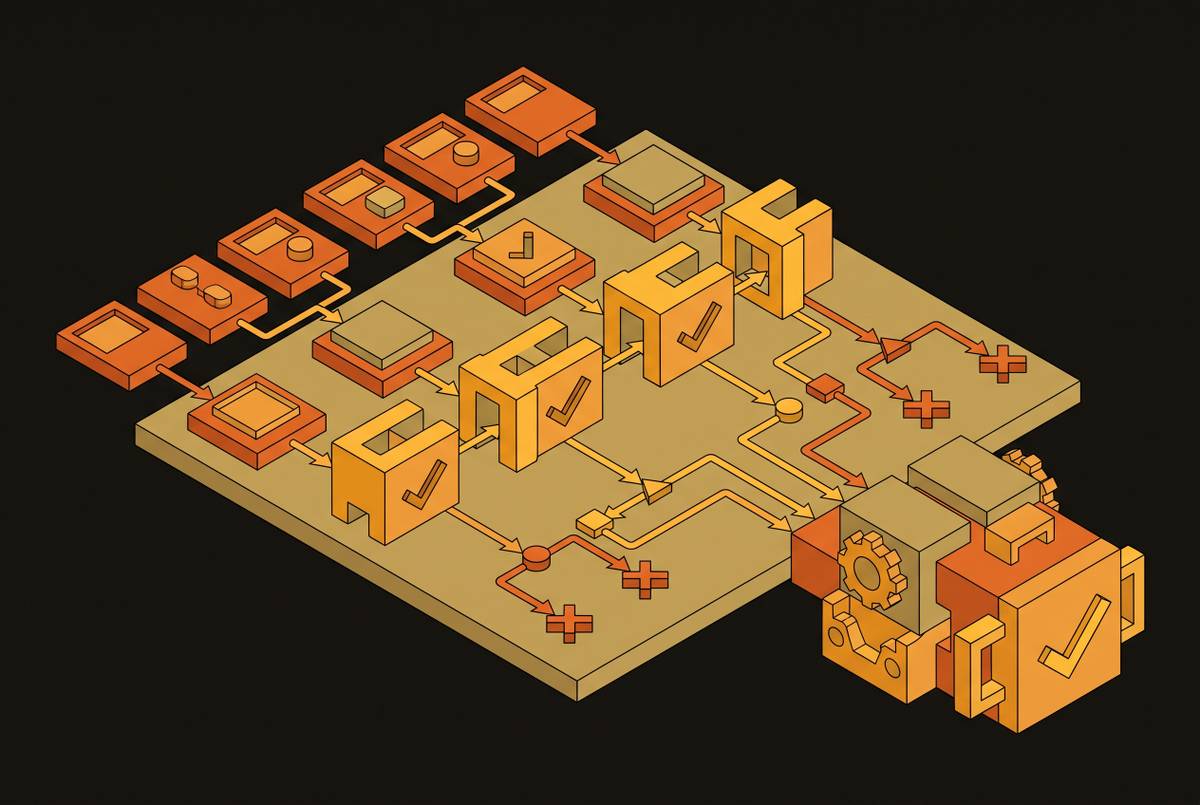
CPQ Output as Structured Handoff to Downstream Engineering Tools
Structured data from CPQ prevents costly re-keying errors across engineering disciplines.
Data center construction is now one of the most capital-intensive infrastructure categories on record. The top five hyperscalers are projected to spend over $600 billion in 2026, a 36% jump from 2025, with roughly $450 billion of that aimed at AI infrastructure alone. U.S. data center construction spending hit a monthly rate of $45.1 billion by December 2025, up 85% from two years earlier. And Sightline Climate's tracking shows 26% of expected 2025 capacity slipped its schedule, with 30 to 50% of the 2026 pipeline projected to miss as well.
At this pace and scale, every handoff along the delivery chain carries weight. A configuration decided inside a CPQ tool is a rack density, a power draw, a cooling load, a cable path someone has to physically run. It's a rack density, a power draw, a cooling load, a cable path someone has to physically run. CPQ software is built to produce a sales artifact: a branded, approved quote. But the equipment parameters and validated configurations packed inside that quote are engineering inputs. The real question is whether that information makes it across the finish line intact, or whether it dies the moment someone prints it to PDF.
What CPQ produces and what it was designed to do
CPQ stands for Configure, Price, Quote. The system sits between the CRM, where deals and opportunities live, and the billing or fulfillment system, where orders actually go. Its job is narrow but important: enforce valid product combinations, apply pricing logic, and spit out an approved document a sales rep can hand to a customer.
Standard outputs are PDF proposals, interactive web quotes, and data exports meant to feed other systems downstream. The CPQ Software Features Guide (ordwaylabs.com, 2026) states those three formats cover most of what a CPQ platform is built to generate.
CPQ is not proposal automation. CPQ produces the priced, approved line items, the configured deal itself. What happens after that, whether it becomes a polished proposal or an actionable engineering input, is supposed to be somebody else's job downstream.
The overlooked part is this. The configuration engine inside CPQ enforces constraint rules: it blocks invalid combinations, checks compatibility, applies discount guardrails. That logic is engineering intelligence, full stop, even though it's sitting inside what everyone treats as a sales tool. In complex manufacturing and engineered-product categories, CPQ output can stretch further, generating BOMs, routings, CAD drawings, and production documents. But that's the exception, not the default setting. It takes deliberate design to get there.
The market reflects this shift. The global CPQ software category was valued around $3.9 billion in 2026 and is projected to climb toward $11 billion by 2035, a compound growth rate near 17%. That kind of growth signals a category outgrowing its original sales-tool skin.
Where the handoff breaks: the gap between a validated configuration and a usable engineering input
The failure isn't random. It happens whenever sales configures a product in one system and engineering has to rebuild that same configuration somewhere else. That's exactly where errors start compounding: components get missed, lead times stretch out, margins quietly erode.
Many CPQ systems simply don't generate BOMs or routings at all. Others generate them in a form so stripped-down they're useless on a shop floor or a job site. The gap between what sales closes and what engineering can actually build off of creates constant, low-grade friction that never fully goes away. A standalone CPQ that forces manual re-entry into other systems doesn't remove a bottleneck. It just relocates one.
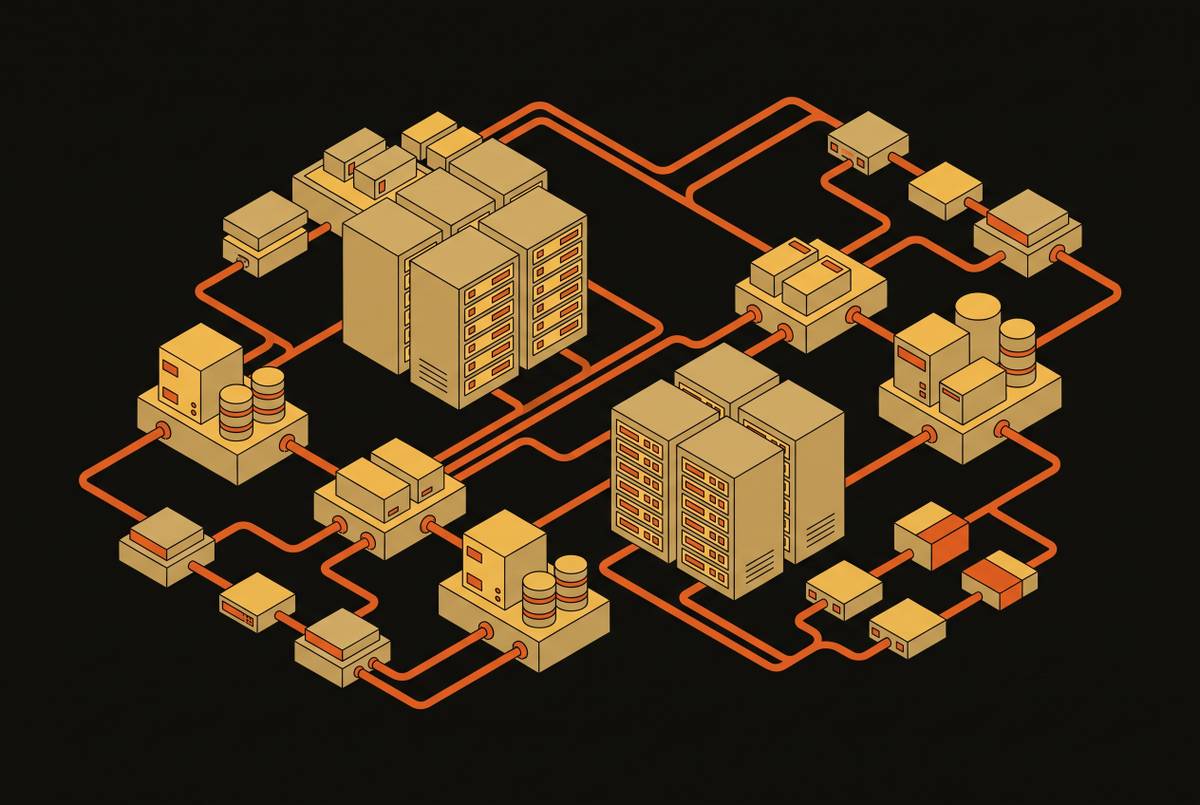
In data center delivery, this plays out in a specific, repeatable way. A rack configuration validated inside CPQ contains power draw per rack, cooling load, weight, physical dimensions, port counts, cable type and quantity. All of that feeds separate engineering workflows that have nothing to do with each other on paper but everything to do with each other in the physical build.
When that configuration arrives downstream as a PDF, each discipline, power, cooling, cable, layout, re-enters the same numbers independently. That multiplies the error surface and eats hours of coordination time that modular delivery schedules simply don't have room for. And if a rack gets moved or a piece of equipment gets swapped after CPQ closes, the entire chain has to re-key everything again. There's no automatic cascade. Someone has to notice, then chase it down manually, across four or five different teams.
This isn't a problem unique to data centers. Manufacturing deals with the same re-keying friction. But the consequences land harder here, because power, cooling, and cable routing are physically interdependent in a data hall, and the tolerance for conflict between them is close to zero.
What downstream engineering tools need to receive from CPQ
Not all CPQ output carries the same weight. A PDF is an endpoint, something a human reads and files away. Structured data is a starting point, something a machine can act on. That distinction is the whole argument here.
Power engineering needs per-rack power draw in kilowatts, voltage and phase requirements, diversity factors, UPS and PDU tier, circuit counts. Rack densities now commonly run between 15 and 50 kilowatts, compared with the 5 to 8 kilowatts that was standard five years ago. Deloitte states next-generation AI racks could reach 370 kW. At that density, a CPQ configuration has to be unambiguous and machine-readable. A PDF line item won't cut it anymore.
Cooling engineering needs heat load per rack and per zone, the cooling technology type (air, direct-to-chip, or immersion), and liquid supply and return parameters. Cooling already accounts for 33 to 40% of total energy use in a typical air- and water-cooled facility, so a misconfigured cooling load that got garbled in a re-keying step isn't a rounding error, it's a real operational cost. As densities climb toward 100 kW and beyond, the thermal demands on cooling infrastructure grow sharply. Whatever cooling technology gets chosen inside CPQ has to survive, untouched, into the thermal modeling tool.
Cable and fiber routing needs port counts and types, cable categories and quantities, structured cabling tier, fiber strand counts, tray fill data. The cable plant implied by a given CPQ configuration is specific, and topology choices made inside CPQ directly drive cable routing decisions. That needs structured data, not a paragraph of prose describing intent.
Layout and BIM need physical equipment dimensions, weight, footprint, clearance requirements, mounting type. Academic work published in the International Review of Applied Sciences and Engineering found that BIM-linked cable tray routing and cabinet families built specifically for data center design improve both quality and speed of construction and facility management, but only if they're fed accurate equipment parameters from the start.
Operations-handoff systems, DCIM, EPMS, BMS, need asset tag, manufacturer, model, firmware version, commissioned parameters. It's the same data CPQ already validated, just in a structured form that flows straight into the asset register without anyone typing it in twice.
None of this is a wish list. Every item here is something CPQ already checks and validates internally. The only open question is whether it exports that data or lets it die in a document.
How manufacturing-oriented CPQ has started to close the gap in data center delivery
The category isn't standing still. In complex engineered-product verticals, CPQ platforms have started pushing their output past the quote document itself.
The aktivsoftware.com (2026) source states that Epicor CPQ, formerly known as KBMax, connects configuration directly to engineering output, auto-generating CAD drawings, BOMs, and production documents for industrial machinery and medical device makers. Tacton CPQ is designed to link configuration to CAD-linked drawings, specifications, and downstream manufacturing outputs, a fit for engineered quoting environments where documentation has to stay in lockstep with whatever the customer actually selected. And in complex manufacturing and industrial engineering settings, bi-directional data flow matters not just for keeping numbers consistent but for reducing the manual re-entry that drives errors and delays.
AI adoption inside this world is still early. ConfigureOne (2026) reported that every manufacturer surveyed uses AI in some capacity, but 56% have only applied it in narrow areas like predictive maintenance or quality control, and just 10% describe AI as fully embedded across the organization. Engineering-grade automation, in other words, is still finding its footing even in mature manufacturing contexts.
Data center delivery asks for more than general manufacturing CPQ was ever built to give. In a factory setting, CPQ outputs a BOM and a routing, and the configured product rolls onto a production line. In data center delivery, the configured product is the facility itself, and the "factory floor" is the BIM model, the power model, the cooling model, and the cable routing tool, all running at once. Data centers rank among the most coordination-intensive construction projects in real estate: power distribution, cooling systems, cable routing, security infrastructure, and structural requirements all converge inside tight physical spaces with zero room for installation conflicts. Campus-scale developments now target power envelopes exceeding 100 megawatts, so a single CPQ configuration at that scale touches electrical, mechanical, and structured cabling engineering across multiple buildings at the same time. Epicor and Tacton serve their markets well. It's a scope problem: data center delivery layers on more simultaneous, physically interdependent disciplines than most manufacturing CPQ was ever asked to coordinate.
What a structured CPQ-to-engineering handoff looks like inside a connected data center workflow
The design principle is simple to state, harder to build: CPQ output should enter downstream tools as first-class data, not as a document somebody has to read and re-type. The configuration engine's validated parameters ought to become the source of record for every discipline that touches the project afterward.
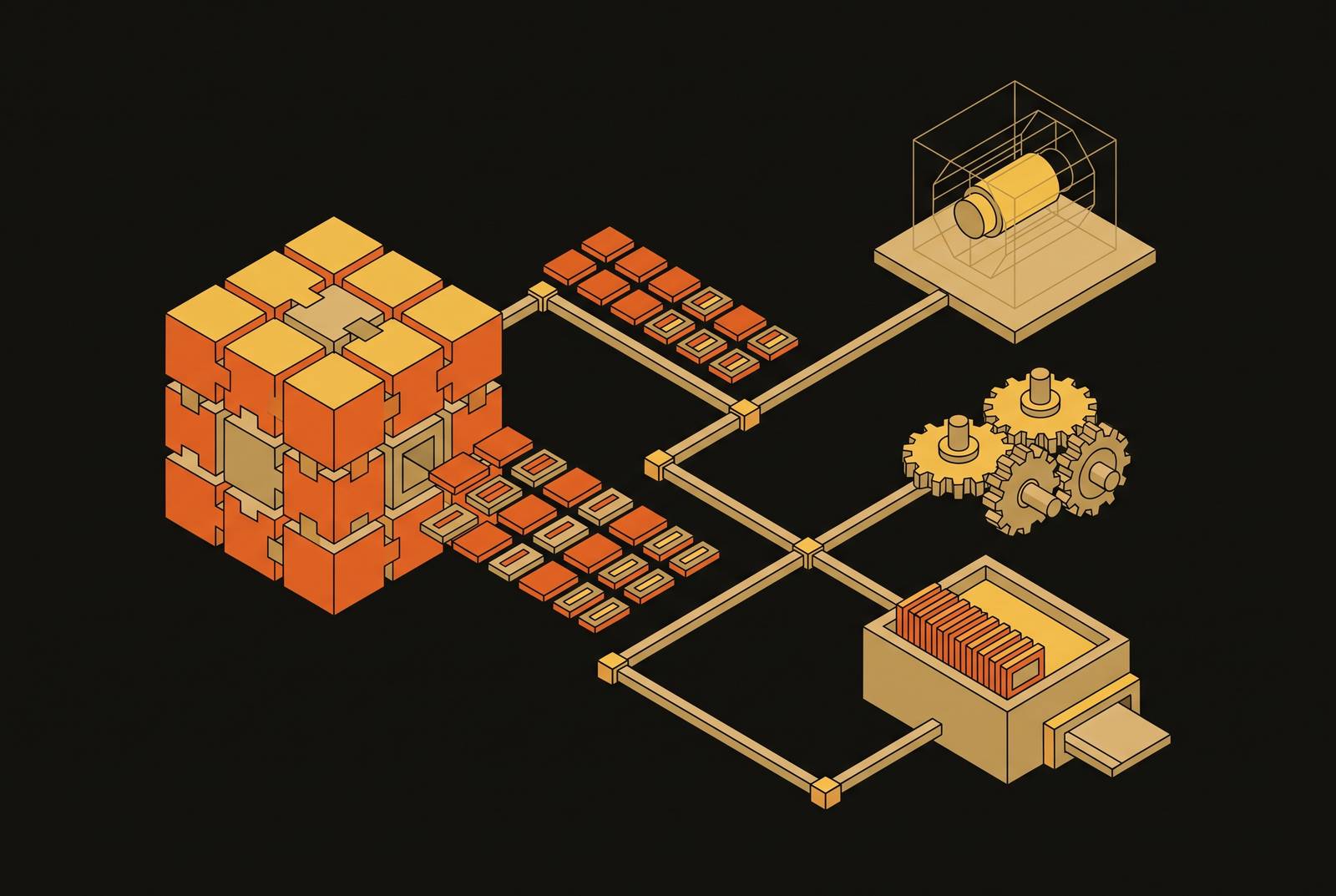
What does that actually look like? Equipment parameters, power draw, dimensions, cooling load, port counts, flow directly into layout, power, cooling, and cable models with no re-keying involved. Pricing and option selections map to specific equipment families that carry their own engineering attributes baked in, so choosing an option commercially is simultaneously locking in an engineering commitment. Constraint rules already validated in CPQ, incompatible equipment pairings, power budget ceilings, cooling capacity thresholds, carry forward into the engineering environment as actual design rules, not footnotes buried in a spec sheet somebody forgets to read. And when a change lands after CPQ closes, an equipment swap, a rack move, a density upgrade, it cascades automatically into power, cooling, cable, and schedule outputs instead of triggering a manual rework cycle that drags four separate teams into a room.
Some CPQ workflows built for construction-oriented industries have begun producing guided configuration outputs that feed directly into construction-ready documentation.
The finish line here is turnover. It's turnover. Structured data that flows through CPQ into engineering has to ultimately land inside DCIM, EPMS, and BMS platforms, and asset parameters validated way back at the configuration stage shouldn't need re-entry into operational systems months later. BIM data that arrives at turnover incomplete, or disconnected from operations, hasn't delivered on what it promised. The structured handoff is where the value actually gets realized, not before.
One more distinction matters inside this workflow: AI and deterministic rules are not the same tool, and they shouldn't be treated as interchangeable. AI has a role where flexibility and language matter, guided configuration, option recommendation, parsing manufacturer spec sheets that arrive as PDFs. Deterministic rules belong wherever precision and compliance are non-negotiable: power budget enforcement, cooling capacity validation, cable fill limits, equipment compatibility checks. Blur that line and the result is a system applying probabilistic guesswork to safety-critical numbers, which is exactly the kind of mistake nobody wants discovered on a job site.
Picture a rack density change ordered midway through a project. In a disconnected workflow, that change means someone manually updates the power model, someone else recalculates cooling load, a third person reworks the cable schedule, and a fourth redraws the layout sheet, each working off whatever version of the spec they happened to have open. In a connected workflow, that same density change propagates once, and every downstream discipline picks up the new number automatically. Same change. Completely different amount of risk.
What prevents connected handoff from being the default
Construction schedules already run hot before CPQ even enters the picture. ConstructConnect's 2025 review of more than 70,000 CPM programs found that 76% finished later than their original baseline end date, and only 12% of baseline schedules met high-quality standards to begin with. A review of Bent Flyvbjerg's database of 16,000 projects found only 8.5% hit both cost and schedule targets. That's the baseline environment structured handoff has to operate inside, and it's not a forgiving one.
Infrastructure teams are being pushed to move faster and standardize delivery without giving up governance, yet many are still running on ticket queues, manual handoffs, and administrator-driven execution. The fragmentation is structural. CPQ lives inside a commercial system, adjacent to the CRM. Engineering tools live inside BIM, power modeling, and cable routing environments. Those systems were never built to share a data model in the first place. Equipment specs arrive from manufacturers as PDFs, get re-typed into CPQ, then get re-typed again into whatever engineering tool comes next, two manual transcription steps before any actual design work has even started. Each discipline ends up keeping its own version of the same numbers: the power team's spreadsheet, the cooling team's model, the cable team's schedule, none of them guaranteed to match the configuration CPQ actually validated.
Organizational lines compound the technical mess. CPQ is typically owned by sales or commercial operations. Engineering tools are owned by design and construction teams. The handoff crosses an org chart boundary as much as a software boundary, and org charts tend to be stickier than software. CSG (2026) reports that a typical mid-market CPQ implementation takes 3 to 6 months to roll out, and during that window, wiring it up to talk to engineering systems is rarely anyone's top priority. The 2026 Gartner Magic Quadrant for CPQ evaluated 16 vendors across a range of use cases, a sign the analyst community itself is still sorting out what "good" looks like for this category once it leaves the sales floor and starts touching a physical build.
None of this is a mystery waiting to be solved. It's a known gap, sitting right at the boundary between two departments that rarely share a data model and rarely report to the same person. Closing it doesn't require new invention so much as it requires someone deciding that a validated CPQ configuration deserves to survive the trip downstream in one piece.
Sources
- CPQ Software Features Guide: How to Evaluate the Right Solution
- CPQ Implementation Guide | How to Implement CPQ (2026)
- Best CPQ Software for Manufacturers in 2026
- Smart Manufacturing 2026: Why CPQ Matters
- Best Configure, Price and Quote Applications Reviews 2026 | Gartner Peer Insights
- cmicglobal.com
- arxiv.org