Real-Time Validation Performance in Engineering Configurators
Deterministic validation catches errors instantly.
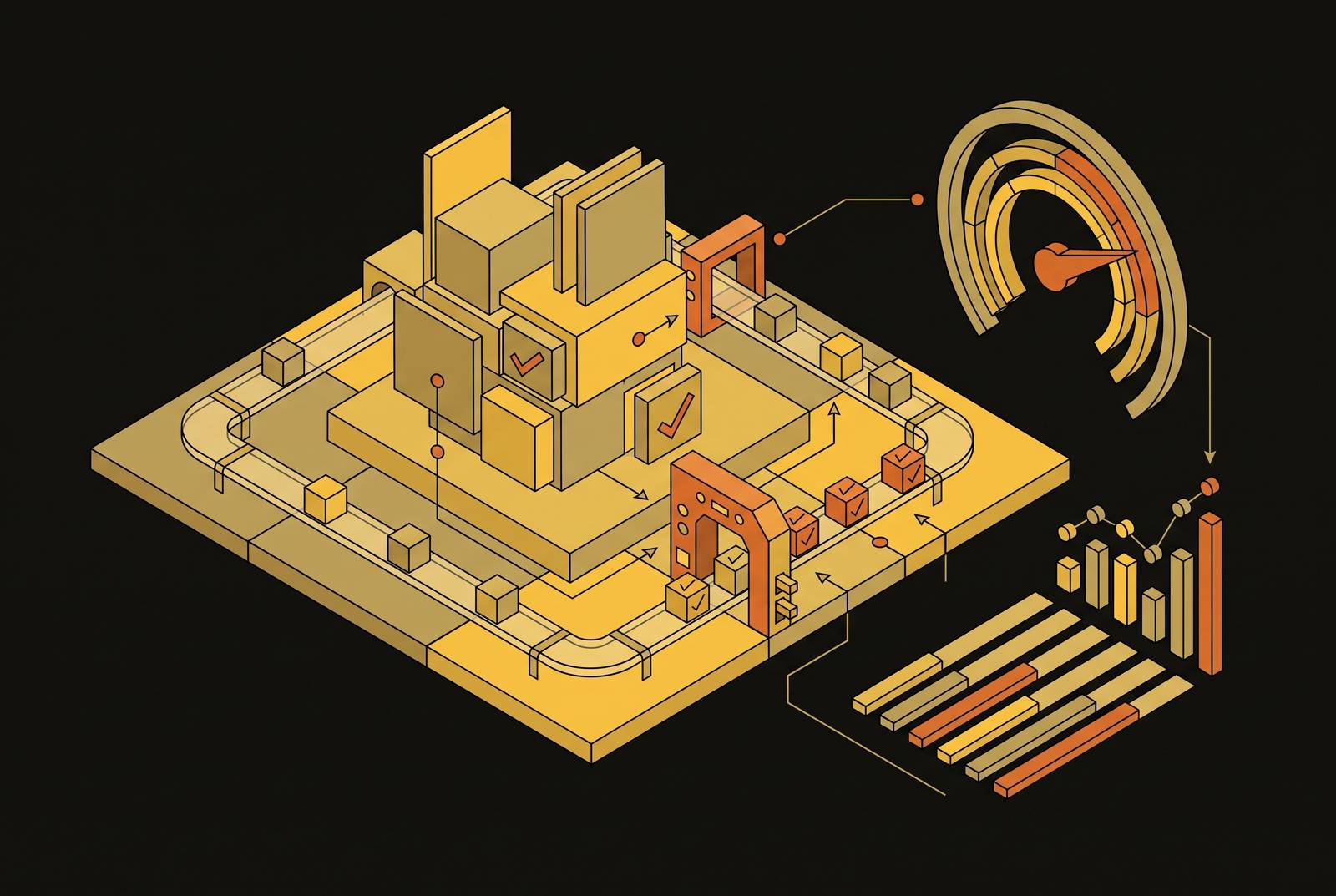
Data centers are being built at an unprecedented pace and scale: 14% compound annual growth through 2030, close to 100 gigawatts of new capacity coming online, and something like $3 trillion in capital behind it, amounting to roughly a doubling of global capacity in five years. That's roughly a doubling of global capacity in five years. Configurators, the software tools engineering teams use to design power, cooling, and cable systems, are supposed to keep that build-out from outrunning itself. But a configurator's value comes down to one thing: whether the validation running underneath it actually catches errors before they turn into six-figure change orders, or just makes everyone feel better while the mistakes pile up quietly.
The mismatch driving all of this is timing. A facility gets amortized over 15 to 20 years. New AI accelerators show up every 12 to 18 months. Engineering teams are being asked to design flexible, upgradeable infrastructure inside a hardware cycle that moves roughly ten times faster than the building itself. Rack density tells the same story from a different angle: facilities built for 5 to 8 kW per rack now need to accommodate deployments pushing past 100 kW, sometimes on the very same floor with the very same ceiling height. The coordination burden that comes with fitting a 100 kW rack next to a legacy rack in the 5 to 8 kW range, sharing power and cooling infrastructure, is not incremental. It's a different discipline. And in that world, a single wrong breaker rating or a missed cooling capacity check doesn't just cost one rack, it can propagate failures across shared power and cooling infrastructure.
What a configurator's validation layer does, and what "real-time" means in practice
Every time a designer changes a parameter, something has to check whether that change is still valid against the rest of the system. That checking layer is the whole promise of a configurator: catch the error before it propagates, not after.
In practice, three different approaches get lumped under the same "validation" label, and they are not interchangeable.
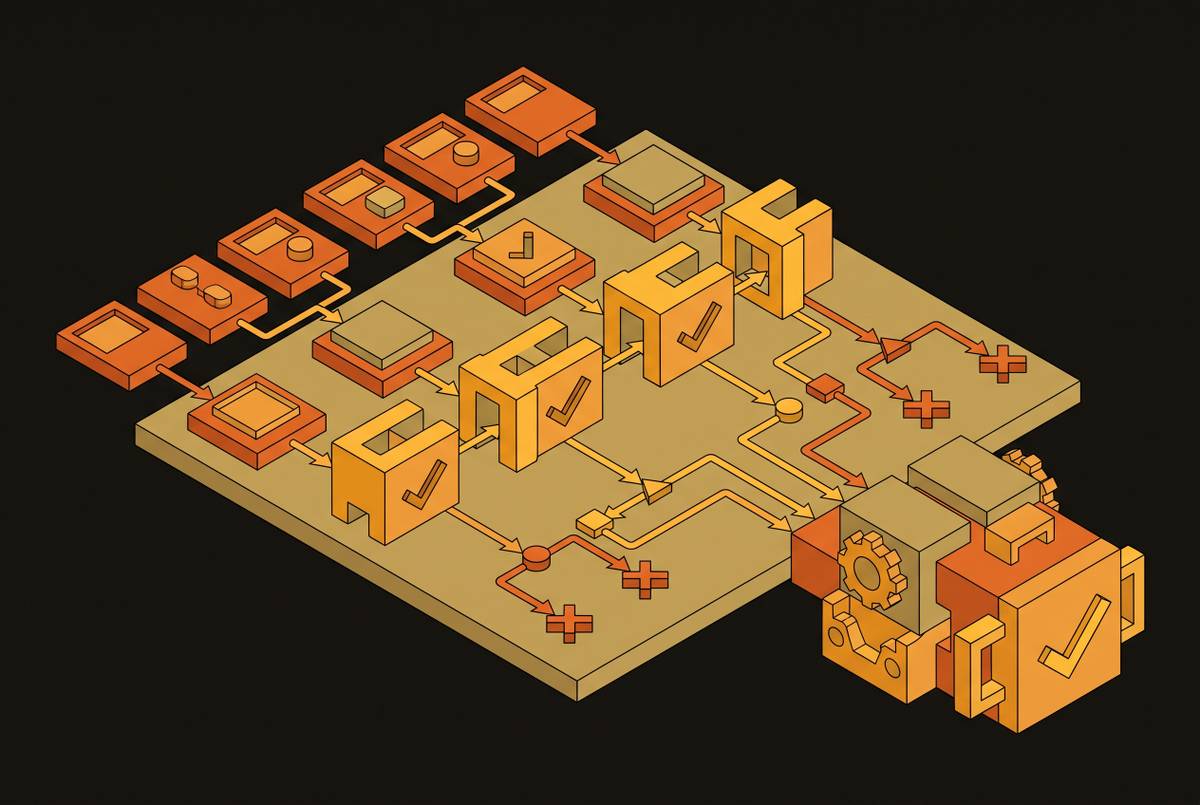
Deterministic rule-based validation fires the instant a change is made, checking it against already-encoded constraints such as a power budget, a circuit's rated capacity, and a minimum clearance distance. Either the change satisfies the rule or it doesn't. Either the change satisfies the rule or it doesn't. No gray area, no false positive to second-guess.
Deferred or batch validation runs on a schedule instead, on save, on export, overnight. This means a design can sit in an invalid state for hours, and nobody knows until the batch job runs, at which point the errors all appear at once.
AI-assisted flagging is a third mode entirely: a model looks at patterns, or at natural language input, and infers where a problem might exist. It's genuinely useful for catching things nobody thought to write a rule for. But it's probabilistic by design, and probabilistic tools have no business standing in for hard physical constraints.
"Real-time" gets used to describe all three, which is the problem. A configurator that runs AI inference when a file is saved is not doing the same job as one that fires deterministic checks on every keystroke, even if both get marketed with the same word. And latency compounds fast: if a designer makes five dependent changes before the first validation check even resolves, the surface area for error has already grown past what that first check was built to catch.
Why deterministic rules are non-negotiable for power, cooling, and cable constraints
Power, cooling, and cable routing are governed by physical limits and electrical codes, and getting the number wrong has a defined, specific failure mode. They're governed by physical limits and electrical codes, and getting the number wrong has a defined, specific failure mode, not a vague one.
AI data center architecture makes this sharper than it used to be. Clusters are heterogeneous now: mixed rack densities, uneven heat loads, and varying liquid cooling requirements sitting side by side on the same row. Misconfigure one rack, and the thermal and power budgets of the equipment next to it are affected too. There's no isolation anymore.
Liquid cooling raises the stakes further. What matters is how well the cooling method integrates with power, monitoring, and the rest of the operational stack. A validation layer that misses a mismatch between a CDU spec and a circuit's rated capacity doesn't just throw a warning that gets clicked past. It produces a facility that can't be safely commissioned, full stop.
Cable and fiber routing carries the same weight, even though it looks less dramatic on paper. High-density structured cabling and ultra-high-bandwidth DAC and AOC assemblies mean a routing conflict isn't cosmetic. It affects signal integrity, it affects whether a technician can actually service the run later, and it affects whether the cable physically fits in a space built with zero tolerance for conflict.
Where AI-assisted validation adds genuine value and where it breaks down
AI earns its place where the problem is too large or too fuzzy for a rulebook to cover every case. Flagging equipment combinations that have caused trouble on past projects, catching a design pattern that drifts from a company's own standards, nudging a designer to double-check a parameter that looks off. That work catches problems and improves designs.
The limits are documented. Research has documented that AI-based extraction of structured data from BIM files falls well short of the accuracy required for unsupervised use in a safety-critical workflow, and performance degrades further across formats outside standard interchange files.
That number matters because it puts a figure on the actual risk of leaning too hard on AI for validation. In this domain, a missed error costs far more than an awkward customer email. It's a construction conflict discovered mid-build, or a commissioned facility that can't carry the load it was designed for.
So the right role for AI in a configurator is fairly specific: pattern recognition, anomaly surfacing, natural-language interaction with design data, pulling parameters out of manufacturer documentation. Places where flexibility and language comprehension are the actual job, not places where certainty is required.
How fragmented tooling turns validation gaps into cascading rework
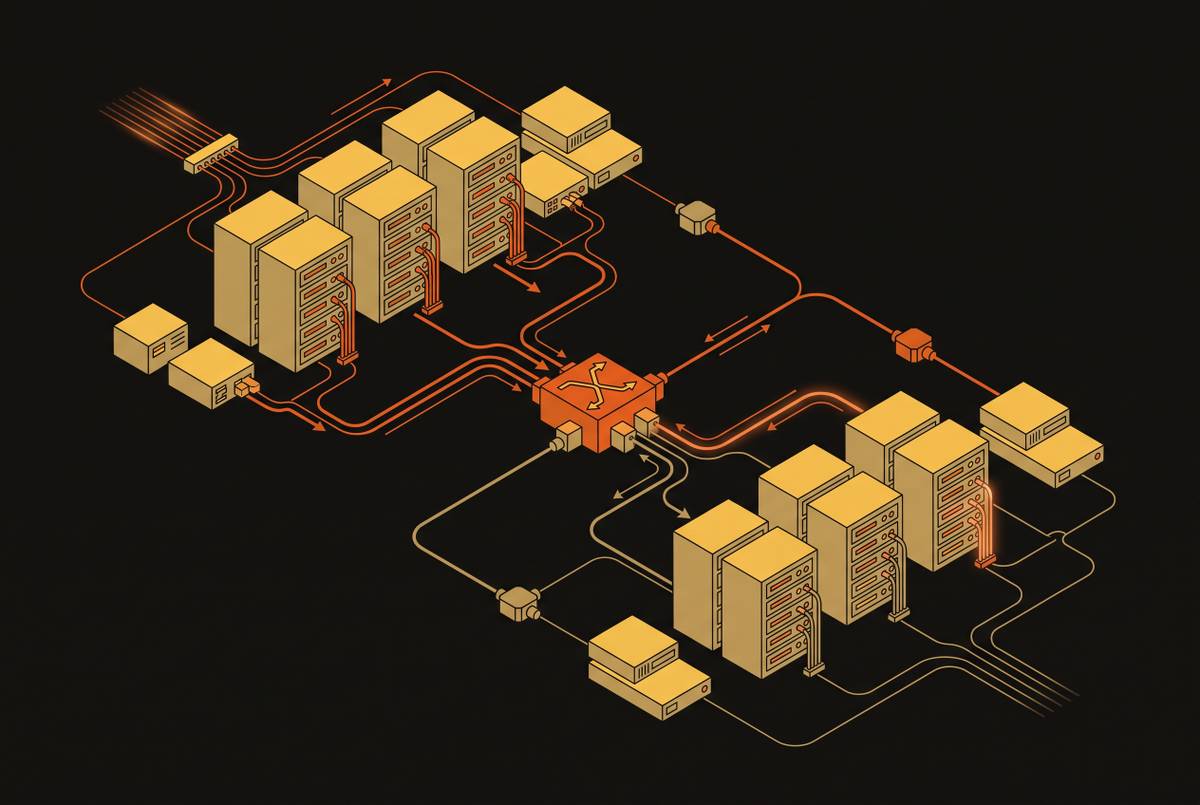
Most engineering teams aren't running one connected system. Power modeling lives in one tool, cooling in another, cable routing in a third, documentation in a fourth, and each one has its own validation logic, or sometimes none. None of them know what changed in the others.
Take a rack move, which is about as ordinary as design changes get. A rack gets repositioned to make room for a liquid cooling retrofit. That single move needs to show up in the power schedule, the cooling capacity model, the cable routing plan, the equipment schedule, and the construction drawings. If those tools aren't connected, every one of those updates has to happen by hand, and every one is a chance for something to get missed.
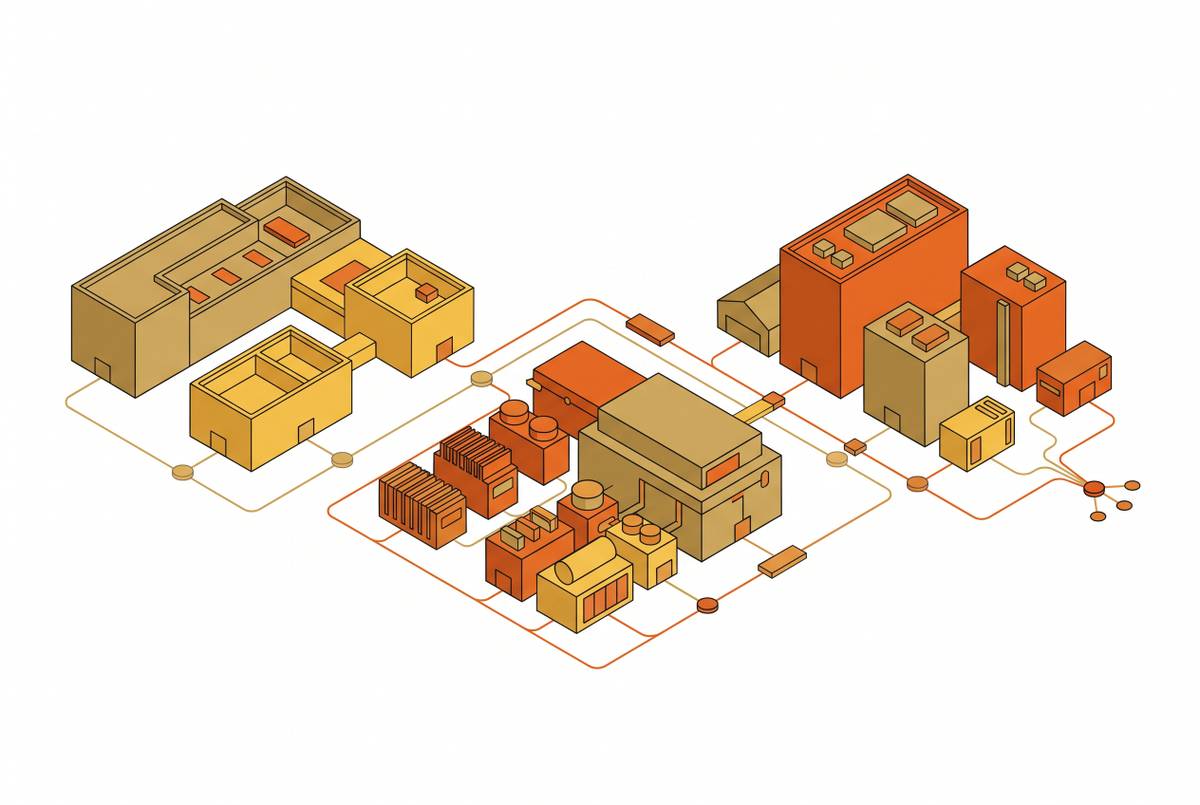
Data centers rank among the most coordination-intensive builds in real estate because of this. Power distribution, cooling, cable routing, security infrastructure, and structural requirements are all converging in tight physical spaces, so an installation conflict isn't a minor fix but a delay.
When validation lives in silos, a check that passes cleanly in one tool can be hiding an error that only becomes visible in a completely different one. And the timing makes all the difference to the cost. A conflict caught inside the configurator costs a parameter change, maybe a few minutes. The same conflict caught during commissioning costs weeks.
The handoff problem: validation that stops at construction and never reaches operations
A configurator can validate every parameter correctly during design and the project can still fail later, if that validated data never makes it into the systems running the facility day to day. DCIM, EPMS, and BMS each manage a different slice of the operational picture, and getting them to talk to each other is not a small integration task.
The division of labor matters here. BMS handles facility-level environmental and building controls. EPMS covers electrical distribution and energy metering. DCIM aggregates power chain telemetry, cooling data, and the asset lifecycle record. Without integration between the three, each one is operating blind to what the others know.
This gap is visible in practice, not just on a whiteboard. Traditional facilities management software has struggled to keep pace with how complex and uptime-sensitive modern data centers have become, and the validated design model that exists at construction handoff often just doesn't translate into the operational asset record DCIM actually needs to run the building.
One example of the integration working the way it's supposed to: Greenergy Data Centers in Estonia deployed an integrated BMS-EPMS setup using Siemens Desigo CC alongside its integrated EPMS, built on the Power Manager extension module, and got unified visibility across HV/MV, LV, and UPS systems as a result. The vendor stack isn't the point. The architecture is: validation-quality data moving from design all the way through to operational monitoring, instead of stopping dead at handoff.
What a validation architecture that protects design integrity looks like
Four things separate a validation layer that genuinely protects design integrity from one that just looks convincing.
Synchronous deterministic rules have to run on safety-critical parameters, on every single change, not on save, not on export. Power budgets, thermal loads, cable pathway conflicts, structural limits: none of these should ever sit in an unvalidated state, even briefly.
Cross-system awareness means a change in one discipline, a rack moved, a PDU swapped out, automatically triggers validation across power, cooling, cable, and documentation together. The validation layer has to understand dependencies between systems.
AI belongs where it adds signal without pretending to offer certainty: pattern-based flagging, pulling specs out of manufacturer documentation, natural-language interaction with the design data. Confined to the roles where probabilistic output is actually appropriate, and not asked to do more than that.
And the output has to be structured and ready for operations. Validated design data needs to leave the configurator in a form DCIM, EPMS, and BMS can actually ingest, not as a PDF or a static export that someone re-keys by hand, but as a structured asset record with equipment parameters, system relationships, and configuration history all intact.
Traceability ties all four together. Every validated parameter, every rule that fired, every design decision that changed a value, should trace back to the constraint or the piece of information that required it. That's what separates a configurator that's auditable from one that's just fast.
ArchiLabs Studio is built around this exact architecture: one connected workflow spanning layouts, power and cooling coordination, cable routing, documentation, and operations-ready handoff, with deterministic rules doing the precision work, AI stepping in where it speeds up responsive tasks, and structured data carried through the whole process so nothing gets lost at the handoff point.
The rest of the market is heading the same direction. Schneider Electric's March 2026 partnership with NVIDIA, aimed at developing validated blueprints for gigawatt-scale AI Factories, and Jacobs' March 2026 digital twin solution for AI data centers both point at the same underlying shift. Validation and simulation are getting built into delivery workflows from the start, not bolted on afterward as a separate check somebody remembers to run.