Deterministic Rule Engines for NEC and NFPA 70E Compliance Checks
NEC and NFPA 70E compliance checks differ from most engineering tasks because the rules themselves are binary. A panel is labeled or it isn't. A boundary is calculated or it isn't. A permit exists or it doesn't. That logical structure, not the stakes involved, is what should determine the tool used to check it.
Why NEC and NFPA 70E compliance checks are structurally different from every other engineering task
Most engineering judgment calls live on a spectrum. A structural engineer weighs safety factors against cost. Another kind of engineer balances comfort against energy use. Electrical safety compliance under the NEC and NFPA 70E doesn't work that way. The rules are written as predicates: conditions that are either satisfied or not, with no middle ground for professional discretion to operate in.
NEC 2026 Section 110.16 shows how far this precision goes. It specifies what a compliant arc-flash label must contain: nominal system voltage, the arc-flash boundary, incident energy or the minimum required level of personal protective equipment, and the date the assessment was completed. Nothing about that list is open to interpretation. A label either has all four elements or it fails the requirement.
The consequences of getting it wrong aren't abstract. OSHA can cite employers under the General Duty Clause if electrical hazards go unlabeled, and local inspectors check compliance at both installation and modification. A missed field on a label is a liability that appears in a citation or, worse, in an incident report.
The 2027 NFPA 70E edition and NEC 2026 were developed with deliberate cross-standard coordination, so the arc-flash assessment date required on an NEC label directly reinforces NFPA 70E's five-year review cycle. One code's requirement becomes the other code's input. Treating NEC and NFPA 70E as two separate compliance checklists misses that they were designed as a connected system, and any platform built to check them should mirror that design.
What the 2026–2027 code cycle changed for data centers
The 2026–2027 code cycle isn't a minor update. It extends arc-flash labeling obligations to nearly every non-residential system, it introduces dedicated DC safety language, and it aligns three standards in a way no earlier cycle attempted.
Earlier NEC editions limited arc-flash labeling requirements mostly to large service equipment, typically above 1000 amps. Section 110.16 now reaches switchboards, switchgear, control panels, meter sockets, panelboards, and motor-control centers across offices, plants, hospitals, data centers, and schools. Residential systems are exempt. Almost nothing else is.
The timing adds its own pressure. The 2027 edition of NFPA 70E is already published and took effect on May 6, 2026, but full floor enforcement doesn't begin until 2027. That gap leaves a transition window through the rest of 2026 during which safety programs have to prepare for a standard that is active on paper before it's active on the floor, stretching the compliance-tracking burden across an extended period.
DC systems get specific new attention. The 2027 NFPA 70E edition carries forward DC-specific PPE requirements in Table 130.7(C)(15)(b), unchanged from 2024, and it covers systems up to 600VDC. But systems at 800VDC fall outside that table's parameters entirely, so they need a separate incident-energy analysis. That voltage range is now common in high-density data center power architecture, and the reason it demands special handling is physical: DC arcs lack a natural zero-crossing point, which makes them exceptionally difficult to extinguish compared to AC arcs.
NFPA 70E and the companion maintenance standard, historically treated as separate documents, are now explicitly linked. The updated framework ties maintenance condition data directly to safety assumptions, so a facility that can't produce up-to-date maintenance records loses the baseline justification for its safety determinations. A gap in maintenance records isn't paperwork debt anymore. It undermines the safety case itself.
Data centers absorb this cycle's impact first because their operating model matches almost every condition the new rules target: continuous uptime, high breaker density, frequent rack-level adds, moves, and changes, and energized work as the default. That uptime requirement is the structural reason energized-work permits under NFPA 70E Section 130.2(B) are routine in data centers. De-energizing a live production environment isn't a simple scheduling decision, which makes the permit process a constant operational reality, and compliance tracking has to happen in something closer to real time.
Why jurisdiction fragmentation makes manual, edition-specific compliance tracking structurally unworkable
A national data center program has to satisfy multiple active NEC editions at the same time, and no single static checklist can hold all of them correctly.
NFPA's enforcement map shows NEC adoption as a patchwork, with different states actively enforcing different code editions at the same moment. That means the same panelboard or the same switchgear bay can carry different labeling requirements purely based on where it sits. Geography, not engineering, decides which rule applies.
This creates a direct operational trap. A team relying on a single NEC 2026-calibrated checklist will over-specify requirements in jurisdictions still running older editions, or under-specify them in jurisdictions that have already adopted the newer rules. Neither mistake survives an inspection. Over-specifying wastes effort and can introduce unnecessary PPE categories or labeling that doesn't match the governing code. Under-specifying leaves real gaps that an inspector will find.
Facility modifications make the fragmentation worse. When equipment gets added, swapped, or reconfigured, the code version in force at that specific moment governs the new installation. The compliance record has to capture which edition applied at the time of the change, and that's a versioning problem. A spreadsheet or a PDF checklist has no reliable mechanism for tracking which rule set applied to which asset at which point in time, across dozens of sites, each potentially on a different edition, because the structure of the problem (multiple concurrent editions, applied at different times, to different assets, in different jurisdictions) exceeds what a static document can represent correctly.
What a deterministic rule engine does when it checks an electrical safety rule
A deterministic rule engine takes each compliance obligation and encodes it as an explicit conditional. Given a defined set of inputs, the rule fires or it doesn't, and it produces the same output every time those same inputs are presented again.
Section 110.16 translates into this kind of logic directly: if the equipment type is a switchboard, switchgear, control panel, panelboard, or motor-control center, and the occupancy is non-residential, and the jurisdiction has adopted NEC 2026, then an arc-flash label is required, and that label must contain the nominal voltage, the arc-flash boundary, the incident energy or PPE level, and the assessment date. Every term in that statement is a parameter the engine can check against known facility data.
The jurisdiction parameter is what solves the fragmentation problem from the previous section. If a rule engine accepts code edition as an input, it can apply the correct rule set to each facility site without maintaining a separate checklist for every jurisdiction. The engine stays the same. Only the parameters change, and the output stays deterministic for each site's specific combination of equipment and governing edition.
Equipment data feeds the same logic directly. Incident energy calculations, arc-flash boundary distances, and PPE category assignments all derive from engineering inputs such as fault current, clearing time, and working distance. Once those values are modeled, the rule fires automatically whenever they change. A rack move or an equipment swap that alters fault current propagates straight through to the label requirement, with no manual re-review needed to catch the change.
Every time the rule executes, it creates a record: the inputs it used, the version of the rule that fired, and the output it produced. That record is structural to how the engine works, and it happens to be exactly the traceability record that an OSHA inspection or an authority having jurisdiction review requires.
Why probabilistic AI cannot substitute for a rule that either fires or doesn't
For NEC and NFPA 70E compliance, the same inputs have to produce the same output every time. That's a property probabilistic systems don't guarantee by design, and it rules them out as the final decision layer for a compliance check.
A probabilistic model generates outputs based on statistical patterns learned from training data. The same input can produce different outputs across separate runs, and there's no way to audit the model to show which specific rule it applied and why it reached a given conclusion. An inspector or a legal proceeding needs a record that shows the exact logic behind a determination. A probabilistic model doesn't produce that record in a form either can evaluate.
The failure mode that matters most is the novel case. An AI system assigning a PPE category based on patterns learned from training data is most likely to fail precisely where the situation falls outside that training distribution: a new 800VDC topology, a jurisdiction-specific amendment, an equipment configuration nobody modeled before. If you encode a deterministic rule correctly, it still fires correctly in that same novel case, because it doesn't depend on having seen something similar before. It depends only on the conditions it was built to check.
For regulatory reporting and any audit-critical decision, the compliance determination itself has to follow explicit logic. AI has real value earlier in the process: it extracts equipment parameters from manufacturer PDFs, flags anomalies in maintenance records, and surfaces which assets are approaching their five-year assessment cycle. None of that changes the requirement that the final compliance decision runs through a deterministic rule.
Cost reinforces the same conclusion. A deterministic rule executes at near-zero marginal cost no matter how many times it runs, while AI inference costs scale with usage. At the volume a multi-site data center program generates, with thousands of labeled assets across dozens of facilities, that per-transaction gap adds up fast.
Codes update on three-year cycles, often with multiple editions active at once, and a rule engine built against one edition goes stale the moment a new one is adopted somewhere in the portfolio. That's a legitimate concern. Maintenance discipline is the answer, not a switch to probabilistic methods. The rule set gets updated when a new standard publishes, edition version is treated as a parameter rather than hardcoded, and the engine keeps firing correctly for each jurisdiction's active edition. Keeping a rule set current as codes change is a governance problem with known solutions. Keeping a probabilistic model consistent across runs for a binary legal requirement is a different kind of problem, and it doesn't have the same solution.
Where AI belongs in a compliance workflow
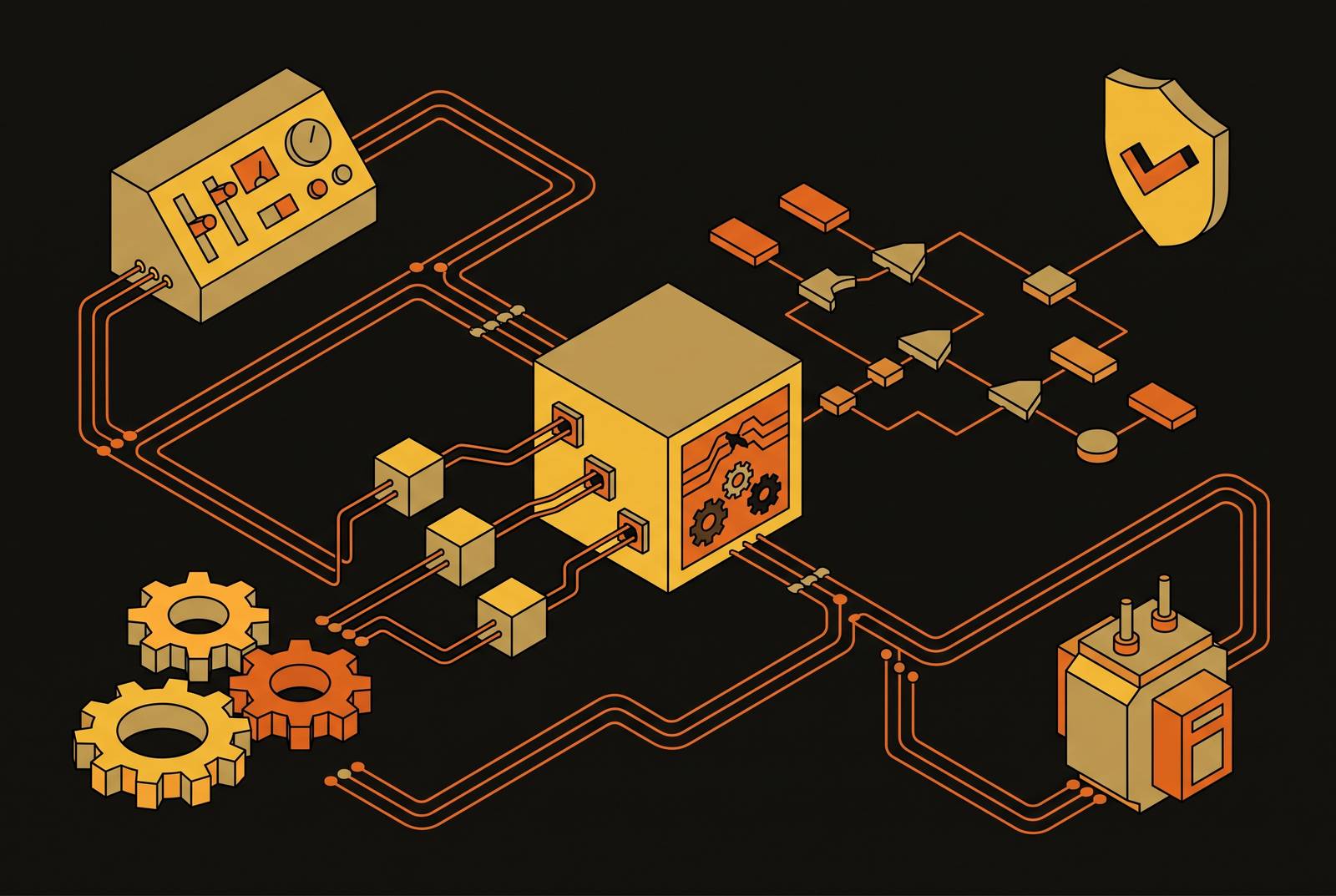
The right architecture isn't a choice between AI and deterministic rules. It puts AI upstream, so it feeds structured data into deterministic rules downstream, and each part does the work it's actually suited for.
AI fits naturally in the extraction and triage work that precedes a compliance decision. Pulling equipment parameters out of manufacturer PDFs and submittals is pattern recognition across unstructured documents, which is a strength of AI systems. Identifying which assets are approaching their arc-flash assessment deadline is a scan across a large dataset for approaching thresholds, another task suited to automated pattern detection. Flagging maintenance records that fail to support a normal-operating-condition claim under the updated NFPA 70E maintenance alignment means reviewing volumes of documentation for gaps, which benefits from automated screening before a person looks at it. Classifying which RFIs carry compliance implications that need engineer review sorts a large intake stream down to the subset that actually matters.
The handoff happens at the moment a compliance decision gets made. Once equipment parameters have been extracted and structured, the rule engine takes over: applying the requirements of the correct code edition, computing arc-flash boundaries, confirming that every required label field is present, and logging the determination with full traceability back to its inputs. AI does the gathering. The rule engine does the deciding.
Safety leaders are adopting a condition-based monitoring model for energized-work decisions, and it follows this same two-layer logic. Continuous monitoring surfaces asset health data through AI-assisted pattern recognition, but the decision about whether a task can proceed safely still follows defined rules. The technology changes how fast information reaches the decision point. It doesn't change what standard governs the decision itself.
In a data center design context, this looks like a continuous pipeline. Equipment data extracted from submittals flows into a model. The rule engine validates arc-flash label requirements against the active code edition for that site's specific jurisdiction. Any change to fault current from a rack move or an equipment swap triggers automatic re-validation, with no manual re-review and no rework. Every determination the rule engine makes gets logged, every parameter sourced, every rule version recorded, and that audit trail is the deliverable.
What operations teams inherit when compliance checks happen at design time rather than inspection time
Compliance checks run through deterministic rules at design time produce structured, versioned data rather than PDFs or paper checklists, and that data flows directly into operations systems and stays traceable for the life of the facility.
NEC 2026 now requires an arc-flash assessment date on every label, but it isn't a deliverable that gets filed away once. It encodes a review obligation that recurs on NFPA 70E's five-year cycle. A structured compliance record created at design time becomes the baseline that every future assessment measures against: equipment gets added, equipment gets changed, fault current gets recalculated, the label gets regenerated, and the audit trail extends forward from where it started.
The maintenance-to-safety alignment the 2027 edition formalizes means maintenance condition data now has to support the safety assumptions behind a facility's compliance posture. Operations teams need a system where maintenance records connect directly to the safety justifications documented at design, not two separate binders that start accurate and drift apart as years pass.
For data centers in particular, de-energized maintenance is frequently impractical in a live production environment, so the energized-work permit process under NFPA 70E Section 130.2(B) is routine. That permit process requires documented justification tracing back to engineering assessments. A rule-generated compliance record is exactly that documentation, already structured and already versioned at the moment it's created.
A design team that delivers structured, rule-validated compliance data at turnover hands the operations team something genuinely usable: an asset list with confirmed label requirements, code references tied to the correct jurisdiction, assessment dates, and the full set of parameters that drove each determination. That's what makes integration with DCIM and facility management systems a real handoff. The compliance record is a living dataset, and the same rule engine that built it during design is the one that should keep validating it every time the equipment underneath it changes.