Testing and Regression Frameworks for Production Rule Engines
How rule engines hide behavioral changes that break data center design.
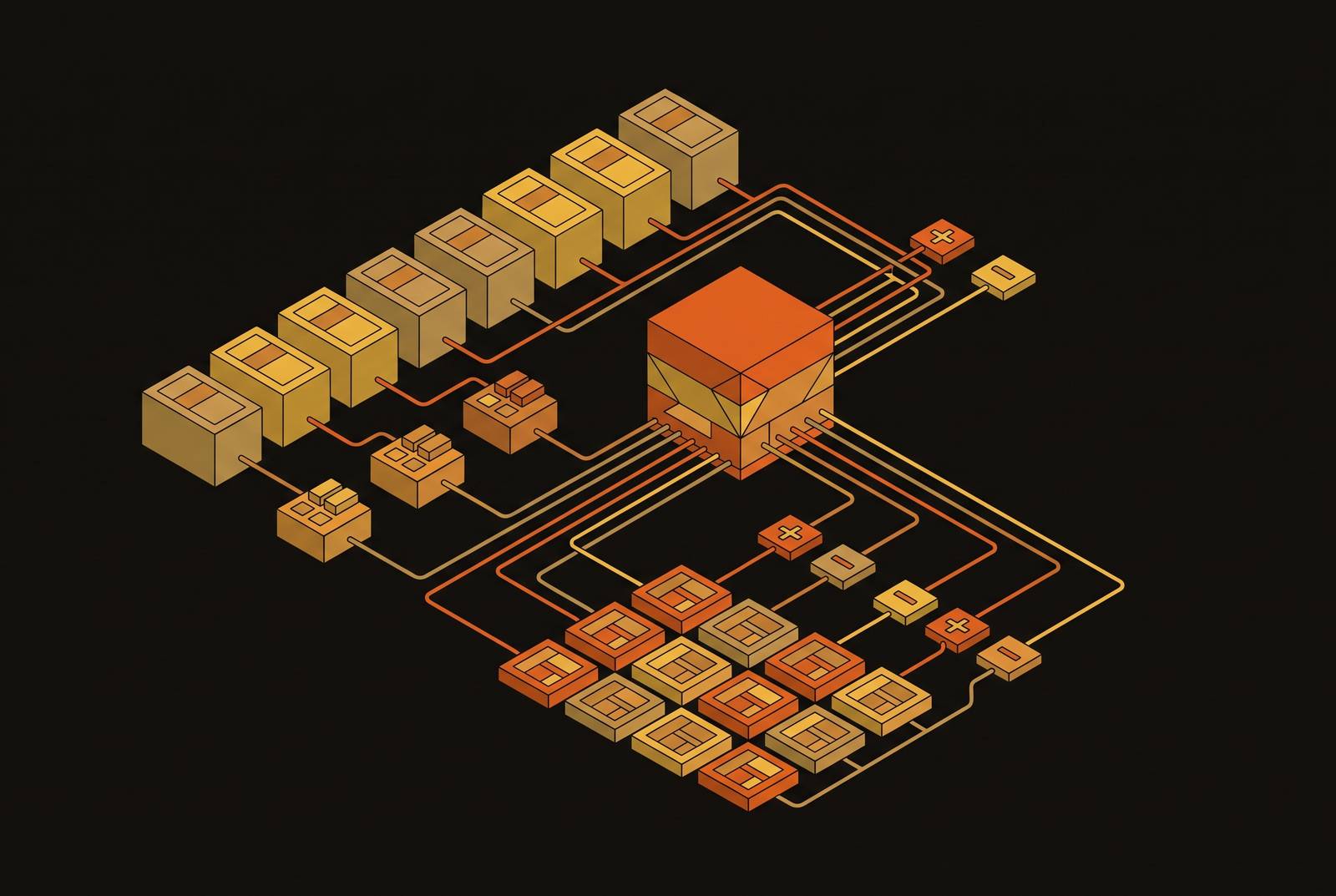
In data center design automation, a valid rule can still produce the wrong engineering answer. The framework must verify outputs, preserve the history behind each decision, and target tests to the reach of each change.
Why rule engines in data center design automation have no compilation safety net
A cable rule can pass every build check and still generate the wrong tray sizing. Its syntax is valid, its inputs are accepted, and its output has the expected shape. Nothing has crashed, but the engineering answer has changed. The failure sits in behavior, where compilation checks offer no protection.
In a rule engine, the rules are the software. Changing a threshold changes the output contract, whether it governs cable tray fill ratios, power circuit assignments, or pathway segregation distances. A rule based on a wrong assumption can fire exactly as written. Tests that check only whether it ran will miss the defect.
Determinism makes this problem tractable while leaving its risks intact. Chishti et al. describe hosted LLM services drifting through provider-side updates without explicit version changes. A deterministic engine avoids that model ambiguity and can reproduce its results from controlled inputs and rule versions. But that advantage counts only when the versions are controlled and the answers are tested.
How a silent rule regression cascades across power, cooling, cable, and handoff deliverables
Consider a fill-ratio threshold changed on an assumption that does not fit AI-era GPU rack densities. GPU clusters have dramatically higher fiber counts per rack than conventional server racks, so that assumption can leave cable pathways undersized. In a connected design, clearance rules may reference the tray boundaries when assigning power circuits. Hot-aisle containment geometry may also use cable pathway coordinates, so the error can spread to cooling zone boundaries. The error can then reach DCIM asset tags and BMS integration points while the build still passes.
Dense power systems, cooling equipment, cable trays, fire protection, and structural elements compete for space. When the drawings misrepresent those relationships, field teams discover conflicts after installation begins. Leaving a rule uncorrected before release leads to RFIs, redesigns, and material changes.
Late detection is expensive because physical work and downstream decisions already depend on the wrong answer. Electrical distribution accounts for a dominant share of GMP on AI-focused data center bids, giving its rules especially costly consequences when they fail. Errors in this cost tier have nine-figure consequences on large campuses. Retrofitting pathway capacity after deployment is significantly more costly than sizing it correctly at design outset.
Handoff adds another acceptance boundary. An operator needing an asset-rich model for CMMS or DCIM integration depends on an agreed tag structure and required attributes. A regression in tag generation can produce an artifact that looks finished but fails integration. By then, the defect has crossed from design logic into the operator’s ability to use the delivered information.
The three interlocking problems a rule-engine testing framework must solve
The framework must solve three problems together, namely deterministic output verification, rule-version traceability, and change-impact scoping. Verification establishes whether stable inputs produce the right outputs after a change. Traceability connects each delivered result to the timestamped rule version that generated it. Impact scoping identifies which tests a change needs, so the framework can run at pull-request cadence.
None is sufficient alone. A passing suite cannot explain a past deliverable if its rule version is unknown, and a complete execution log does not make a wrong answer correct. Without impact scoping, thorough testing becomes too costly to run continuously and teams start bypassing it. The next section develops output verification, the following section establishes the version record, and the section after that explains how to select tests without losing coverage of connected systems.
Building a deterministic output verification layer for rule engines
The practical answer to testing rules is a fixture library. A fixture is a canonical input state held steady across rule versions, such as a floor-plan layout at a specific rack density or a cable tray fill at a specific fiber count. Holding the input constant makes an output change attributable to the changed rule. The comparison then exposes behavioral drift that a successful execution would hide.
Each test must establish that the correct rule fired on the correct input and produced the expected output. Any output difference is a regression signal that may reflect an intentional change to the answer. Scenario simulation and what-if analysis let engineers validate those changes before production.
Tests of row layout, white-space utilization, and stranded-capacity thresholds need standardized floor-plan fixtures that show under- or over-provisioning across rack generations. Tests for power and cooling need separate variables for rack load, redundancy configuration, and cooling zone boundary. Storing structured test data separately from test logic lets the same check cover many combinations without hard-coding each scenario.
Both rules and fixtures need versions so their combination can be reproduced later. The library can then be used for small checks during a pull request, broader checks before merge, and complete regression before rules are promoted to production. These different uses of the same controlled evidence share a definition of correctness.
AI can help draft rule sets and initial fixture candidates, but experienced engineers must review and refine them. Its useful role is accelerating the capture of engineering logic. The runtime decision must remain deterministic and inspectable. A faster route to a draft does not remove the need for validation.
Rule-version traceability as an engineering governance requirement
A field conflict eventually demands a precise answer about which rule was live when an output was generated. A rule name cannot provide that answer because the logic behind the name may have changed. Even a system that passes every service check can use a superseded version. Traceability therefore needs to be part of engineering governance as well as software logging.
The record must connect the timestamped rule version, its execution inputs, its outputs, and the person who approved it for production. Outputs need enough detail to map a cable schedule, power circuit assignment, or DCIM tag back to the execution that produced it. Together, those records establish who approved the decision logic and on what basis the result was produced. This is the evidence that makes automated engineering decisions defensible, just as a signed-and-sealed drawing carries responsibility for the decisions it contains.
That responsibility continues through acceptance. Where delivery format, tag structure, and required attributes are contract deliverables, the governing rule version must be provable at handoff. A deliverable that looks complete can still fail to meet that contract. The owner-operator receives the operational value of automation only if the handover information is usable and its basis can be established.
The same record makes rollback safe. A previous version must be pinned and its test results retained before it can serve as a known recovery point. Every output produced under the regressed version must also be identifiable for reprocessing. Otherwise, teams that revert the rule cannot tell which downstream deliverables still have its errors.
Scoping change impact so regression suites run at the pace of delivery
Running every test on every change is not the only rigorous option. A suite that takes hours will come under pressure when delivery tightens. Selective regression answers that pressure by running the tests that could plausibly be affected. It reduces unnecessary work only if the selection follows real dependencies rather than guesses about which discipline owns the rule.
The dependency map must show which fixtures exercise a rule, which downstream rules consume its outputs, and which deliverable templates use the results. A fill-ratio change may therefore need tray-sizing tests and checks on the power clearances it affects, while the rest of the power-circuit suite can be left out. The earlier cascade matters here because a domain label alone does not define the reach of a change. Coverage is only as sound as the map used to select it.
The cadence assigns different checks to different decision points. Per-PR smoke tests confirm that changed rules fire, produce the expected schema, and do not break direct consumers. Pre-merge selective tests check the fixtures that a change affects and the rule domains connected to them. Pre-release full regression runs all tests in the library before promotion, and post-deploy synthetic checks run canonical end-to-end scenarios against the production rule set.
This layering resolves the apparent conflict between speed and rigor. Fast checks support frequent edits, while full runs are reserved for scheduled release gates. The dependency map must be maintained as part of the rule library because most rule-engine platforms do not generate it automatically. When a small change triggers an unexpectedly large suite, the map also exposes coupling that warrants refactoring.
Coverage must grow with the rules. New rack densities, fiber counts, and power thresholds need corresponding fixtures rather than reliance on the assumptions present at design inception. A fast suite built on stale inputs is not an effective safeguard.
What ArchiLabs Studio's connected architecture changes about rule governance in practice
The framework depends on a continuous connection between engineering inputs, rule decisions, and delivered outputs. Fragmented workflows break that connection when information is manually rebuilt across models, spreadsheets, PDFs, and operational systems. A test on one side of an export cannot establish what happened after downstream reformatting. Exchange formats and processes must be explicitly managed, or information is lost at the boundary.
A connected data model makes this framework operable across layouts, engineering systems, cable routing, documentation, and handoff artifacts. Within that shared model, verification can follow a change through the deliverables it affects without teams having to compare separate exports by hand. The model and schedule do not have to be reconciled as independent versions. That changes testing from a check on an isolated artifact into a check on the connected engineering result.
The same architecture supports the other governance requirements. Recording RFIs, design decisions, and equipment parameters in the workflow preserves the context behind rule-driven outputs. Maintaining dependencies between design elements makes the reach of a change computable rather than dependent on a senior engineer reconstructing it. These connections provide the basis for continuous traceability and automated test selection, though engineers still have to establish the fixtures and approve the rules.
Structured handoff to DCIM, EPMS, and BMS is the final test of that continuity. Tags must meet the operator’s acceptance criteria, and the generating rule version must remain attributable at integration. In a connected workflow, the artifact and its provenance travel together through export and re-import.
Implementing the framework: where to start and what to build toward
Start with canonical inputs and recorded expected outputs for electrical distribution, cable tray fill, and DCIM tag generation. The first library does not need to be complete. A small baseline that works well is more useful than a large suite that nobody keeps up to date.
Next, give every production rule a version and a timestamp, and record its approval. Require a pull request, a regression run against the fixture library, and a named approver before a rule enters production. With that foundation in place, document which rules consume other rules’ outputs and which fixtures exercise them. Build this map incrementally, then use it to automate selective regression.
The first useful signal comes when a specific fixture failure reveals a previously silent defect before merge and teams fix it before it reaches downstream deliverables. Another is reducing the time to trace an RFI to its governing rule version from hours to minutes.
Power infrastructure availability is the binding constraint in data center construction, with execution capacity a significant secondary factor. Preventable rework consumes capacity that projects cannot readily spare. The investment is therefore not a choice between governance and speed, but between controlled changes and expensive recovery.