Authentication and Authorization Scopes for Embedded Engineering APIs
Scope architecture enforces accountability across connected engineering systems.
Most engineering teams treat authentication as IT's problem: a login screen, a password policy, something that happens before the real work starts. In a connected data center platform, that framing collapses. Authentication and authorization scopes are the mechanism that enforces traceability, multi-tenant isolation, and auditable change propagation across every system a project touches, from layout and power to the handoff into operations.
A rack move, a power circuit update, a COBie export: each of these is a workflow action, and each is also a record of who authorized what change to what system. When scopes are treated as a perimeter checkbox, that record stops existing. Without scope discipline, the chain of accountability that critical-facility delivery depends on cannot be rebuilt after the fact. Nobody can say who permitted a change to the power model, which integration touched the cable schedule, or whether the DCIM received validated or unvalidated asset data.
The stakes here are not symmetric with ordinary software. A scope misconfiguration in a consumer app is a privacy incident, bad enough on its own terms. In a data center platform, the same kind of misconfiguration can let a planning-phase read operation propagate into a live BMS write, or let one project tenant's facility model overwrite another's. That difference in consequence is why scope architecture belongs in the same design conversation as layout generation and power routing, not downstream of it.
OAuth 2.1 and MCP authorization as enforcement for engineering workflows
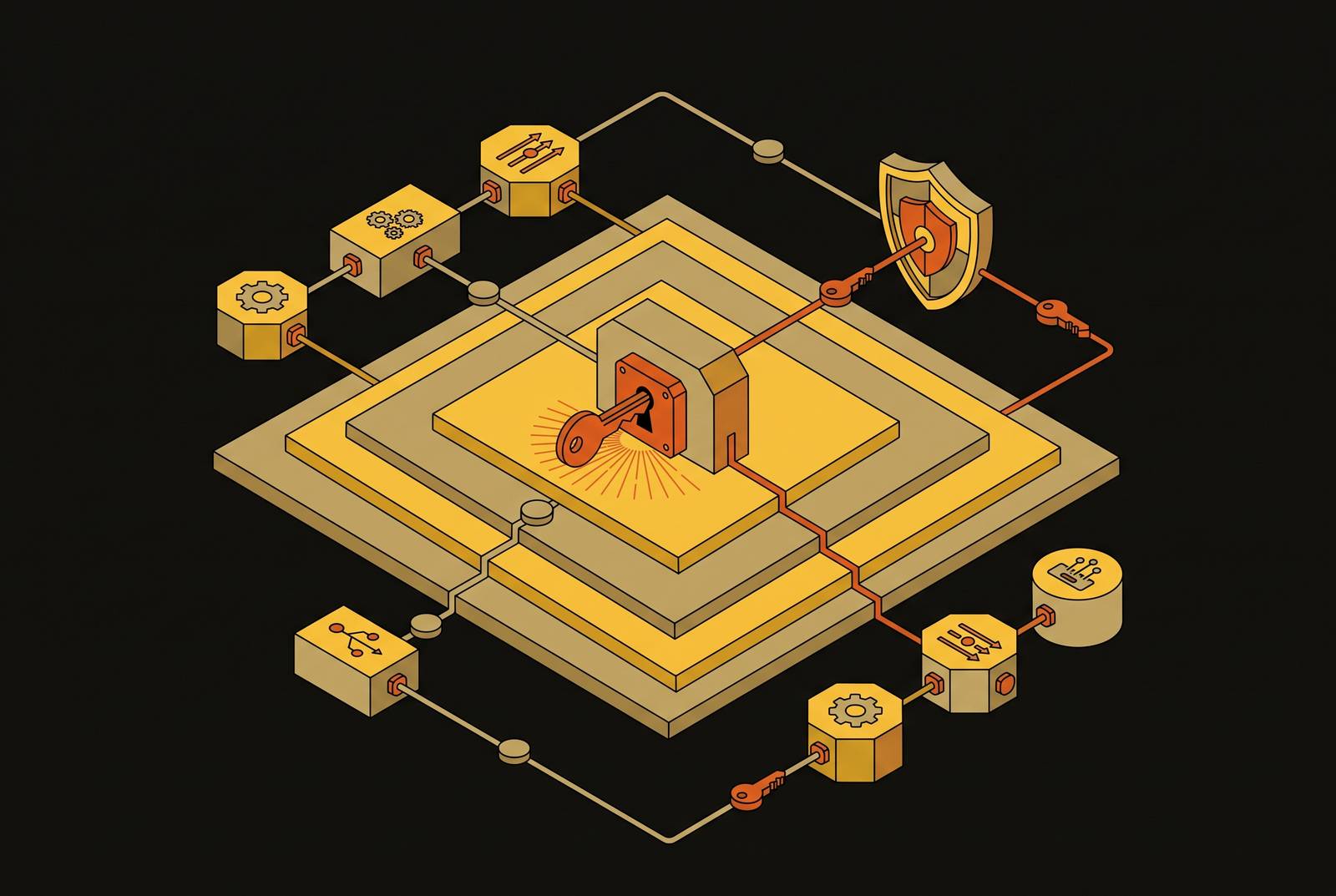
The Model Context Protocol's authorization specification gives this idea a concrete mechanical form. The MCP server acts as an OAuth 2.1 resource server. The client acts as an OAuth 2.1 client. The authorization server issues scoped tokens that spell out what the client may touch. That three-part structure maps directly onto embedded engineering API design: a layout tool, a power router, and a DCIM export process can each sit in one of these roles, with the token defining the boundary between them.
The spec requires MCP servers to implement OAuth 2.0 Protected Resource Metadata (RFC9728), and requires clients to use that metadata for authorization server discovery. Servers should also include a scope parameter in the WWW-Authenticate header to signal which scopes a request needs, a recommendation rather than a hard requirement, but one that follows the principle of least privilege from the very first interaction. For an engineering platform, that means a new integration does not start by asking for broad access and narrowing later. It starts narrow by design.
The scopes_supported field reflects this same instinct. By MCP convention, it represents the minimal set of scopes needed for basic functionality, and it only comes into play as a fallback when no scope appears in the WWW-Authenticate challenge. Additional scopes get requested incrementally, through step-up authorization, as a workflow actually demands more. A layout-viewer integration can start with read-only access to geometry and escalate only when a specific action calls for write access elsewhere. Nothing is granted ahead of need.
Clients have to treat whatever scopes appear in the WWW-Authenticate challenge as authoritative for the request at hand, and they cannot assume a fixed relationship between that challenged scope set and scopes_supported. Scope enforcement, in other words, is dynamic and per-request. It is not a setting configured once during onboarding and forgotten.
Transport matters too. HTTP-based transports are expected to conform to the authorization spec. STDIO transports retrieve credentials from the environment instead, and the specification simply does not apply to them. A platform running local agents alongside cloud-connected integrations has to handle authorization differently for each, even within the same product.
Machine-to-machine traffic between engineering systems, a layout engine calling a power router, a power router feeding a DCIM export, runs on the OAuth Client Credentials Flow with short-lived tokens, available through a draft MCP authorization extension rather than the core spec. Long-lived API keys have no place here: they cannot be scoped to a specific action surface, and they cannot be revoked per workflow when something goes wrong.
Scope granularity as a genuine design trade-off
Coarse scopes, the read:everything and write:everything kind, are simple to issue and simple to manage. They also hand out far more access than any single workflow actually needs. Fine-grained scopes match the real capability surface, but when you spread them across dozens of integrations, teams struggle to keep them straight. Neither extreme works well for a platform spanning layout generation, power routing, submittal review, and DCIM handoff all at once.
Coarse scoping fails in a specific, predictable way. A read-only layout viewer can silently inherit write access to structured asset exports. A passive integration, one nobody thought of as a risk, ends up able to push unvalidated geometry into a DCIM that treats the data as authoritative simply because the token technically allowed the write.
Fine-grained scoping fails in the opposite direction when it is under-specified. Consider a document-intelligence integration built to read spec context, compare submittal data against design requirements, and draft an RFI response. That single task needs access to both the model store and the document store. If those two surfaces run incompatible auth models, the integration has to perform two separate credential handshakes to do one job. That breaks the single-token traceability that would otherwise make the whole action auditable: instead of one authorized event, there are two, and reconciling them after the fact is its own project. This is the same failure mode that occurs later in the RFI cascade, where one unresolved question triggers a spec revision, four resubmittals, and coordination across three trades.
AI agents add a further wrinkle that matters here, even before the deeper discussion of AI versus deterministic validation later on. Agents use Authorization Code or CIBA flows to capture user consent, then act using scoped tokens distinguishable from ordinary human traffic. The governing rule is simple: an agent acts as its user and never beyond that user's scope. An agent's effective permission is the intersection of what it was granted and what its user is actually authorized to do, never more than either one alone.
Multi-tenant scope isolation at the token level
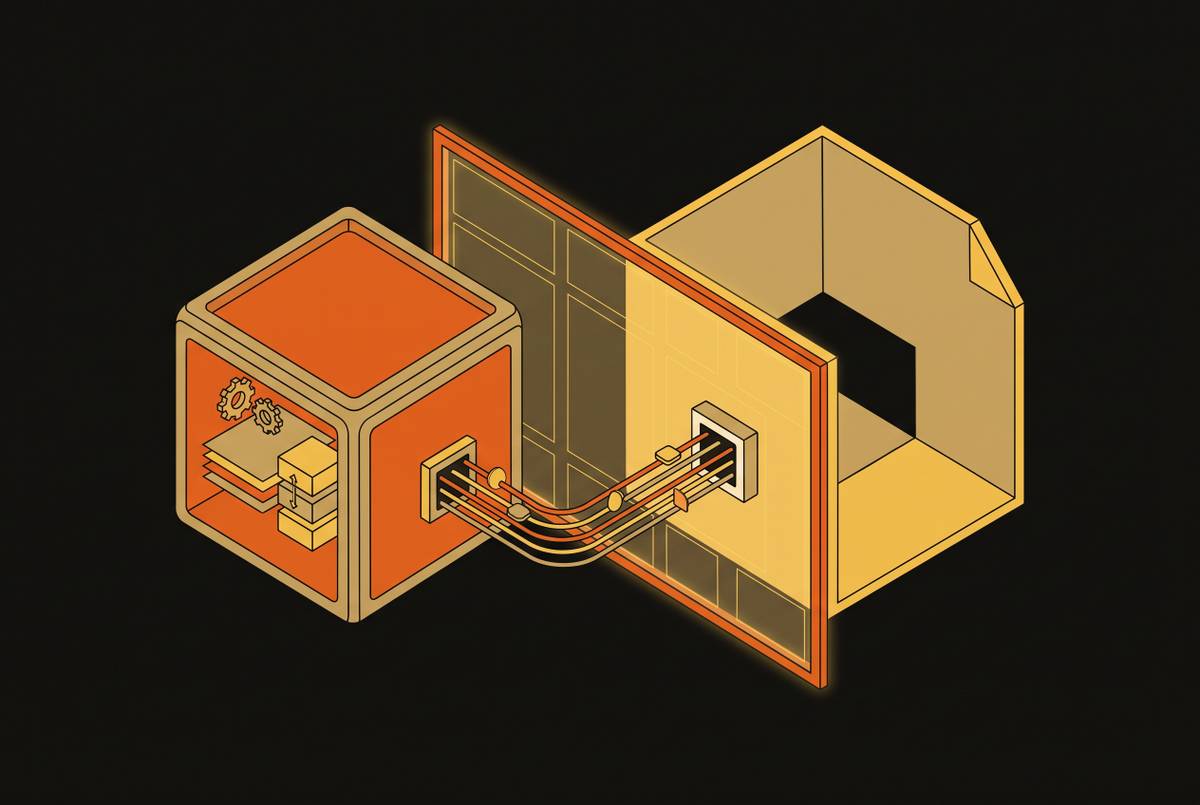
Data center platforms rarely run one project at a time. They run dozens, often for different clients, different facilities, different stages of design and construction, all inside the same software. In a multi-tenant embedded platform, an agent passes a tenant ID with each call, and the platform routes that call to the right tenant's credentials and permissions. That routing is a hard enforcement boundary, not a courtesy. Without it, one project team's cable-management agent could read or overwrite another project's facility model entirely by accident.
Tenant ID alone does not cover the full risk. The scope also has to encode which discipline surface a token covers, mechanical, electrical, or IT, so that a mechanical agent cannot write to the electrical model even inside its own project tenant. Isolation has to happen along two axes at once: between projects, and between disciplines within a project.
The Greenergy Data Centers deployment in Estonia shows what this looks like at the facility level. Unifying BMS and EPMS visibility across HV/MV, LV, and UPS systems required one integration governance model instead of a set of parallel auth schemes running one per vendor. Parallel schemes create gaps in the attribution record, and those gaps become visible during a commissioning dispute, when someone needs to know which system authorized which change, and the answer has to come from records that were never built to agree with each other.
Credential portability deserves attention here too. When a platform vendor holds the authorization relationship directly and customers cannot access or rotate their own credentials, that is a structural lock-in risk, not a minor inconvenience. Evaluating how portable credentials are belongs in the scope architecture conversation from the start, as a design question, not a procurement question raised after the contract is signed.
Scope architecture and the boundary between AI-generated outputs and deterministic-validated results
AI-generated layout drafts and deterministic-validated outputs carry different levels of trust, so every system downstream has to be able to see that difference. Without distinct scope signatures marking which layer produced a result, a DCIM, an EPMS, or a BMS has no way to tell whether what it received passed validation or not.
The strongest objection practitioners raise against AI-led engineering automation is auditability. For power topology, cable separation, and alarm logic, a deterministic rules engine paired with explicit scope guardrails can be audited step by step. A generative model's output cannot be traced the same way. Scope signatures answer this objection directly, as a technical mechanism, not as a design preference stated in a slide deck.
AI generates candidates, a deterministic validation layer gates them, and the gated output carries a scope signature recording both which layer produced it and what validation step it passed. A DCIM receiving a structured asset export can then tell, from the token itself, whether the data was human-authored, AI-drafted, or AI-drafted and deterministically validated, because the distinction is encoded in the authorization chain.
Scope over-reach for AI agents carries a steeper cost in physical infrastructure than it does almost anywhere else in software. If an agent gets write access it cannot reliably exercise, it can push an unvalidated layout change straight into a power model. Unwinding that error means manual rework across every downstream system that already consumed the bad change: cable schedules, cooling plans, documentation, all touched by something that should never have been writable.
Scoped handoff to DCIM, EPMS, and BMS, where the authorization chain must survive the boundary between design and operations
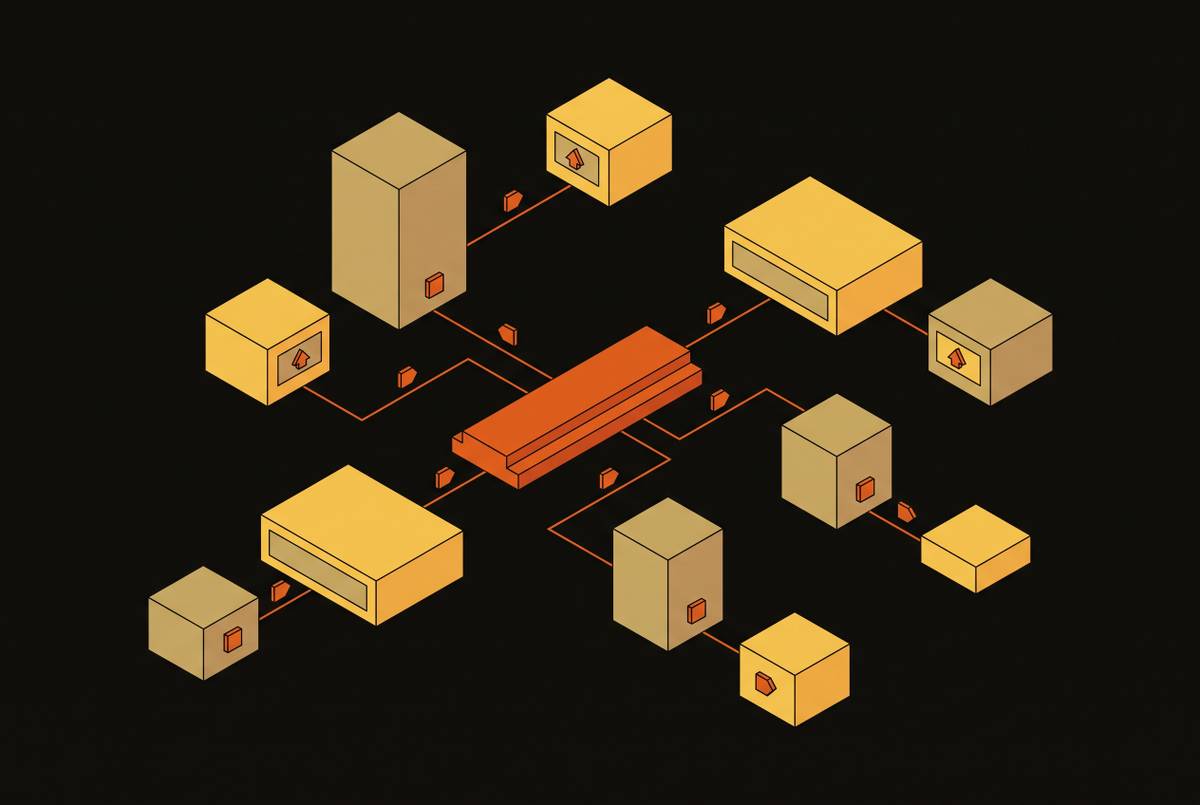
BMS, EPMS, and DCIM each serve a different operational audience and own different pieces of data. Integration architecture has to define which system owns each data point, which system triggers which alarm, and how data moves between them so nothing duplicates and nothing gaps. The embedded API's scope model has to encode those ownership boundaries directly, or the system on the receiving end has no way to validate where its data came from.
Scoping the export itself matters as much as scoping the access to it. An embedded API built to export COBie-compliant asset records, rather than raw model geometry, is what actually makes the BIM-to-DCIM handoff automatable. Scope architecture decides whether that export carries the discipline attribution, mechanical, electrical, IT, that a DCIM needs to route assets to the right place.
Crossing further into operations, northbound integration from DCIM to ITSM, NOC systems, and dashboards, and southbound integration from BMS and EPMS into DCIM, runs on protocols including SNMPv3, Redfish, Modbus, BACnet, and OPC-UA. Each of these protocol boundaries is a place where the scope chain from the design platform has to translate cleanly. If it does not, the receiving system cannot confirm which discipline an asset record actually came from.
Federal liquid-cooling builds show what happens when you leave this for later. DCIM integration requirements for liquid-cooled and hybrid-cooled environments, covering CDU telemetry, leak detection architecture, BMS and EPMS integration, alarm design, and the documentation package handed to operations, need to be structured before construction finishes. Retrofitting integration after handover costs significantly more and rarely gets done completely.
This is the same root cause behind what gets called the BIM graveyard: models delivered at project completion that never see operational use because the data never actually crossed into operations. Part of that failure is a scope architecture failure. BIM-to-DCIM handoff needs explicit schema alignment and a shared asset identifier strategy settled before construction begins, and the scope model governing what the embedded API is allowed to export is what enforces that alignment in practice, not just in planning documents.
Scope fragmentation across discipline tools as a primary driver of manual rework and lost traceability
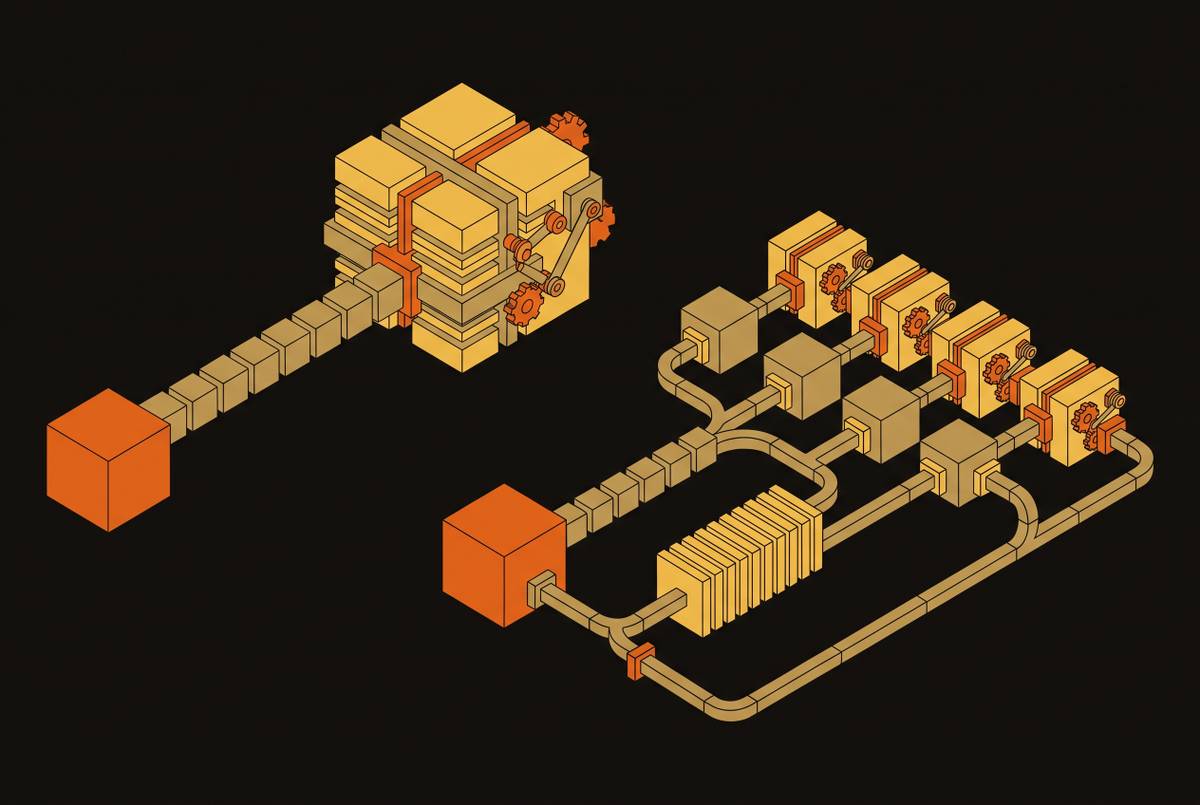
Individual scope failures are bad enough on their own. The pattern that turns them systemic is fragmentation: layout tools, power tools, cable tools, and submittal tools each running incompatible auth models, with no shared way to pass authorization context between them. Data cannot move automatically from design into operations under those conditions, and every manual re-entry of that data is a break in the traceability chain.
Picture a rack move that should cascade automatically through power, cooling, cable, and documentation schedules. Fragmented auth turns that into a manual task: someone re-enters the change in each discipline tool by hand, because the tools have no way to exchange scoped tokens carrying the original authorization context. The RFI cascade shows the same pattern at the document layer. One RFI triggers a spec revision, four resubmittals, and coordination across three trades. If a document-intelligence integration holds a single scoped token covering both model access and document store access, it can short-circuit most of that. Fragmented auth instead forces two separate credential handshakes, and that break splits what should be one auditable action into two disconnected ones.
Engineering capacity is already constrained on most projects. Every manual credential handshake or re-authentication step between systems adds to the load on staff who do not have time to spare. Properly scoped embedded APIs remove that tax. Fragmented auth models multiply it, one re-key and one broken audit trail at a time.
You do not need another tool bolted onto an already crowded stack to connect things. It is scope architecture that lets the tools teams already use talk to each other, so a scoped token issued from the layout engine can authorize a write to the power model and a read from the cable schedule within one auditable action, without separate credentials for every discipline involved.
That is where the argument closes. Every RFI answer, every design decision, every equipment parameter should be traceable back to the authorization chain that permitted it. Scope architecture is the technical infrastructure that makes that traceability possible.
Sources
- Authorization - Model Context Protocol
- Beyond OAuth: Task-Scoped Authorization for AI Agents via Natural Language Slices
- Authorization Architectures for Tool-Using AI Agents
- Authentication and authorization in microservice-based systems: survey of architecture patterns
- AI Agent Multi-Tenant Architecture: Isolation, Resource Governance, and Shared Infrastructure
- Token Management and Credential Rotation in Multi-Tenant SaaS