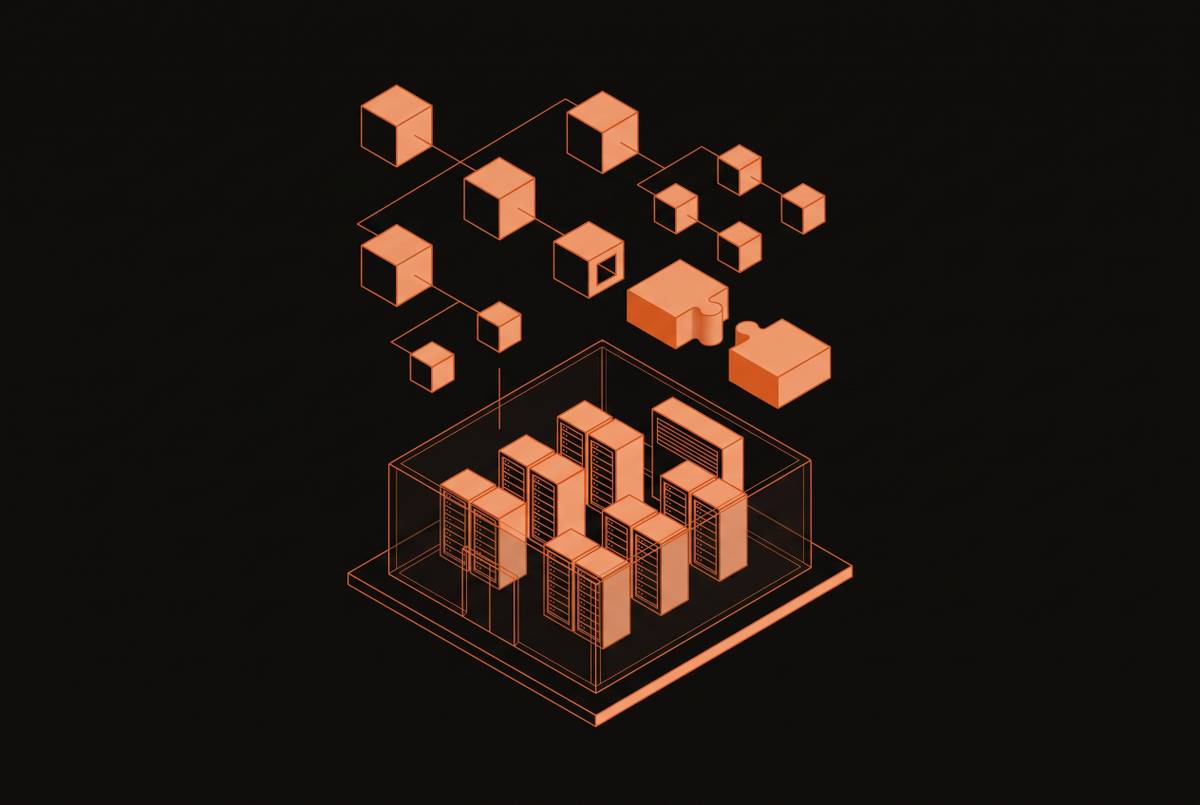
Data Loss at Design-to-Operations Handoff in Critical Facility Projects
Structured asset data handoff must become a contractual project milestone, not an afterthought.
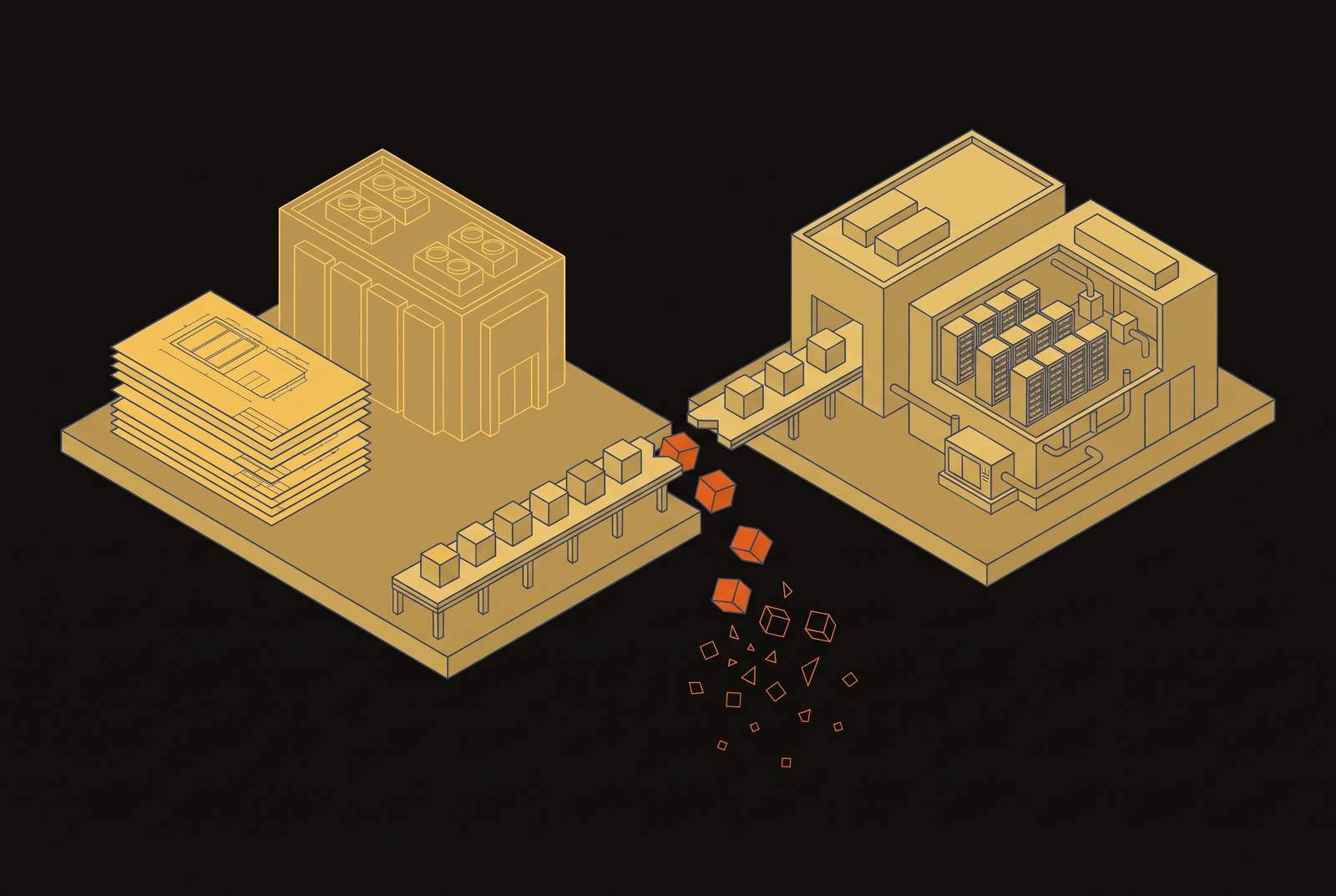
DCIM-ready BIM handoff from design models to operations requires structured asset data, shared asset identifiers, and reconciliation against installed conditions before turnover. Data loss at that handoff is a structural failure. ArchiLabs Studio addresses the gap through a connected project workflow, but the governing requirement comes first. Structured handoff to DCIM, EPMS, and BMS must count toward project completion.
Why design tools and operations systems have never shared the same finish line
Revit is used for geometry and coordination, panel-schedule spreadsheets are used for electrical work, and coordination platforms are used for clash detection. Each serves a defined discipline and its deliverables. None is built to produce the complete structured asset records that DCIM, EPMS, or BMS needs at turnover. A coordinated design can therefore meet its delivery requirements without providing the data needed to operate the facility. The tools have finished their work before operations can begin its own.
That mismatch is easy to hide inside a detailed BIM model. The model serves designers and contractors as an authoring tool and a design-of-record reference, while DCIM maintains the live operational record. Geometry and design information do not, by themselves, establish the asset records that power management, environmental monitoring, and building controls depend on. When those roles are left undefined as the project is set up, the operations team has to bridge the gap.
COBie shows that structured transfer is already possible. It defines a structured subset of BIM information for the operations team, but its presence as a standard does not make it a project requirement. Without a contractual mandate, projects can reach turnover without shared asset names or links between model objects and maintenance documentation, leaving facilities staff to re-enter data for months. When COBie is mandated from the outset, with defined data drops at multiple milestones, facilities teams can import structured asset data into their CMMS in hours or days.
What operations actually inherits when handoff is not designed as a milestone
Without a defined handoff milestone, operations inherits design intent rather than a reliable account of installed conditions. Commissioning results may expose differences between the design and the installation, but those findings do not help operations unless they are reconciled in DCIM before ownership transfers. Resolving discrepancies afterward is significantly more expensive, and manual re-entry consumes time rebuilding information that already exists in the BIM model.
The damage does not stop at DCIM. EPMS and BMS also depend on the handed-off record for power management and environmental monitoring, while change control relies on an accurate starting state. Platforms that coordinate EPMS, DCIM, and intelligent PDUs to enforce rack- and outlet-level power caps can only enforce what their data reflects. Wrong handoff data can therefore lead these platforms to enforce the wrong state. Meanwhile, new AI facility equipment adds asset types that make this inherited record harder to repair, just as operations has less time to repair it.
How capital scale and AI-driven demand have raised the cost of getting handoff wrong
Bashir et al.'s co-design paper projects combined capex guidance from major hyperscalers near $600–700 billion for 2026. At that scale, even a small share spent on avoidable rework and re-entry represents a large absolute cost. A delayed operations start is not just an administrative inconvenience. The same broken handoff that was expensive on a smaller project now sits inside a much larger capital commitment, where correcting downstream errors becomes a larger financial event.
AI training also changes what the record must describe. Power delivery, cooling models, interconnection design, and east-west traffic patterns call for choices about the whole facility that shape how it runs for years. Design loads above 100–200 kW per rack are being requested more often, so delivery sequencing must be more repeatable and certain than it was for conventional facilities. Liquid cooling manifolds, high-density GPU clusters, and immersion pods also introduce object types that standard COBie schemas do not cover without extension. A familiar handoff format is therefore not automatically a complete one.
Jadhav et al.'s lifecycle co-design study demonstrates at the Frontier supercomputer that cooling plant topology decisions made before construction have carbon and cost consequences across the full service life. Those decisions outlast the project that made them. An operational record that loses the connection between design choices and installed systems weakens the basis for later decisions. The record must include a complete equipment list and accurately preserve the facility that operations must manage.
At the same time, demand has compressed delivery timelines. Operations teams must get systems running and start managing capacity with less time to spend months entering data by hand. This creates a tighter dependency between project delivery and operational readiness.
The project workflow mechanisms that produce handoff failure before turnover arrives
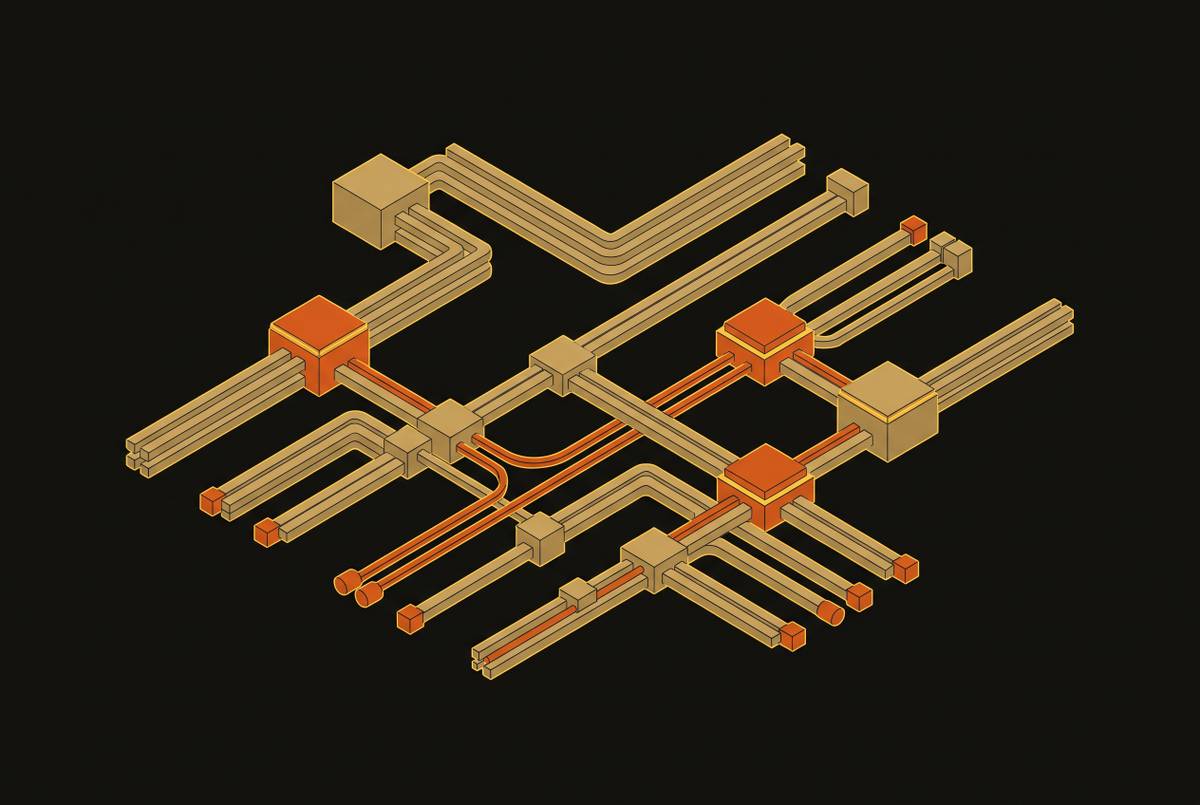
Schema misalignment begins before construction, when teams decide which information their models and systems will hold. Some BIM attributes fall outside operations' needs, and some DCIM fields require data from outside BIM. Shared identifiers cannot fix that mismatch alone. Without both explicit schema alignment and a shared asset identifier strategy, the systems accumulate incompatibilities that cannot simply be resolved during handover. An export at closeout cannot provide data for operations that no one on the project was required to produce.
Construction decisions then widen the gap between the record and reality. An RFI settled in a corridor conversation rather than recorded can become a contract interpretation dispute later. In a critical facility, commissioning tests systems against design intent, so undocumented field decisions surface when resolution is most expensive. The RFI, submittal, and change order need one traceable record connecting what was decided, why it changed, and what it cost. Otherwise, operations inherits the result without the decision trail needed to explain it.
An unresolved RFI is a hold point, because power or cooling equipment cannot be released for fabrication until its submittal clears. An RFI that reopens a submittal can directly delay procurement when lead times are already measured in months. When the GC uses one platform and a key mechanical subcontractor uses another, re-keying data by hand adds transcription errors each time information passes between them.
Commissioning cannot repair those breaks through an informal walkthrough. Design-to-as-built reconciliation needs a formal workflow and defined acceptance criteria, while sensor and telemetry validation connects the static model to live conditions. Without that validation, the model cannot confirm its own accuracy. A visually complete model can still be unfit for operational decisions because neither its asset data nor its connection to the facility has passed a clear acceptance gate.
Anchor Defense's federal build analysis describes a hybrid approach in which DCIM holds the authoritative operational record for physical assets, spatial relationships, power topology, and environmental monitoring, while BIM remains the design-of-record reference. But the relationship must be designed into delivery. Retrofitting integration after handover is significantly more expensive, is rarely complete, and becomes harder with every week after commissioning.
What treating structured handoff as a first-class project milestone actually requires
Operational acceptance should be defined before construction begins. A BIM-to-DCIM handoff specification should establish schema alignment, shared asset identifiers, and data drops at project milestones, with the needs of EPMS and BMS included in the handoff scope. The project must meet those requirements before it is complete. This makes structured asset data part of the work to be delivered, rather than a request the integration team raises after the model has been built for another purpose.
Ownership must be just as explicit as the schema. The duty to keep the model accurate should pass from the construction contractor to the operations team with written duties and a sustainment plan that includes ongoing change control. Otherwise, even an accurate handoff begins drifting as the facility changes. Where ATO considerations apply to DCIM or a connected digital twin environment, they should be addressed during design. The same operational engineering standard applies beyond federal builds, where acceptance, ownership, and upkeep also need to be spelled out.
Commissioning should then act as the validation gate. Test results need reconciliation against DCIM design data before as-built handoff, and sensor and telemetry validation must establish the model's connection to live conditions. It is normal for what gets installed to differ from design intent. Delivering those differences undocumented is not. The gate turns a project record into an accepted operational baseline, rather than asking operations to discover which parts of the model it can trust.
Earlier in delivery, AI can help expose the decisions that threaten that baseline. AI-assisted RFI management can classify and tag questions by trade, system, location, drawing reference, responsible party, and urgency, while distinguishing information requests from scope changes, substitutions, and latent design conflicts. It can also assess schedule, procurement, cost, commissioning, and downstream coordination risk. Price alone is a poor guide to urgency. A clarification with a low dollar cost may still hold up electrical energization or integrated systems testing, so it is a high-risk question that needs attention.
ArchiLabs' approach puts that division of work into practice. AI supports creative and responsive work, classification, triage, and natural-language interaction, while deterministic rules govern design validity and compliance. Precision cannot depend on an AI judgment call. The remedy is therefore not a better tool in isolation, but a workflow in which speed serves a defined operational acceptance standard.
How a connected project workflow changes what operations inherits on day one
In a connected workflow, RFI answers, submittal approvals, design decisions, and equipment parameters remain traceable to the information supporting them. The operational record grows as delivery proceeds. It does not have to be reconstructed from memory or email chains at closeout, because the decisions that shape installed conditions remain connected to the record. Commissioning can then validate that record instead of becoming the first attempt to assemble it.
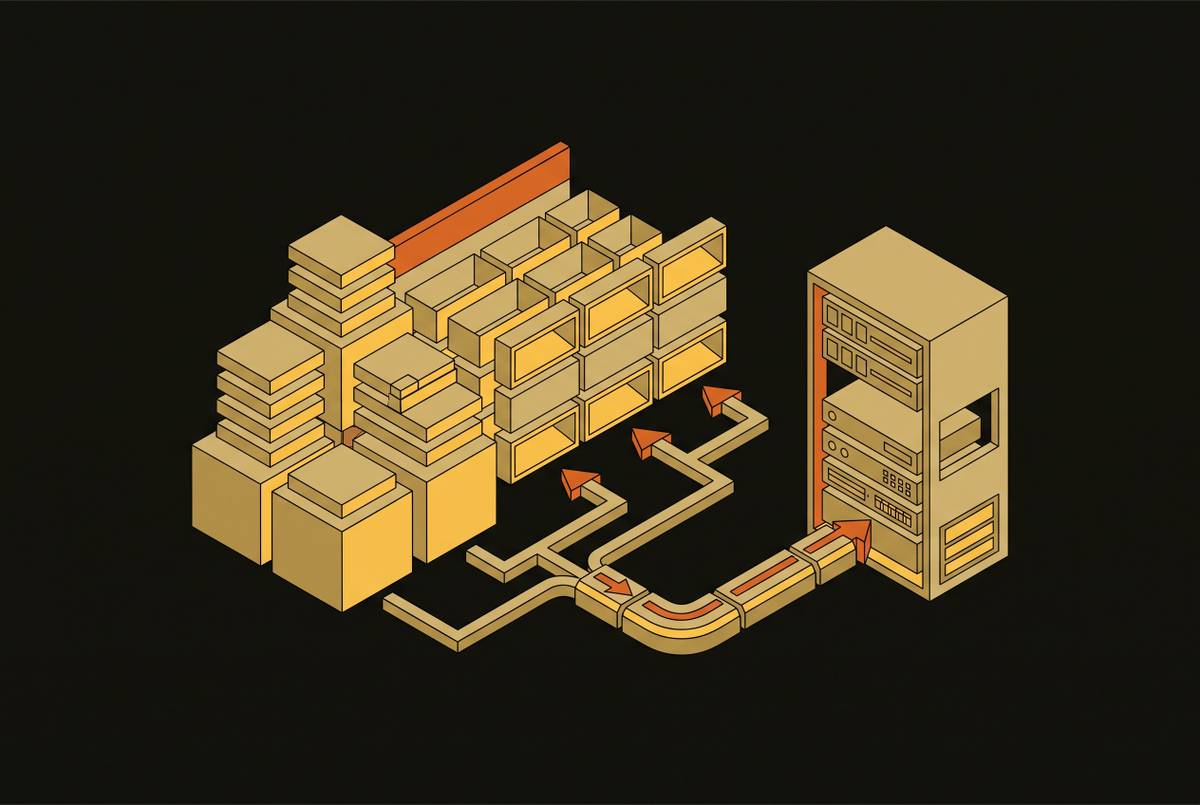
Information from manufacturer submittals goes into models, schedules, and validation rules without being re-keyed by hand into each downstream system. This removes the transcription step that can corrupt asset information in transit. A rack move likewise cascades across power, cooling, cable, and documentation instead of triggering separate rounds of manual rework.
ArchiLabs Studio is built around that connected delivery model. It brings layouts, critical-system coordination, cable routing, documentation, RFIs, and operations-ready handoff into a single workflow, assembling the structured asset data that DCIM, EPMS, and BMS need during delivery. Its approach integrates with tools teams already trust. That is the practical bridge between BIM design models and operations systems.
With that bridge in place, BIM remains the design reference while DCIM maintains the live operational record. EPMS and BMS can begin from reconciled asset data rather than wait through weeks or months of manual remediation. The day-one test is concrete and demanding. Operations should be able to make a rack placement decision using DCIM alone, without calling anyone from the build team. If it cannot, the handoff is not complete, however polished the documentation looks.